News Analysis
California Pushes $1.1B Into Transit, Rail Work as 2026 Nears
With much funding distributed by formula, agencies are lining up fleet, facility and repair work ahead of procurement
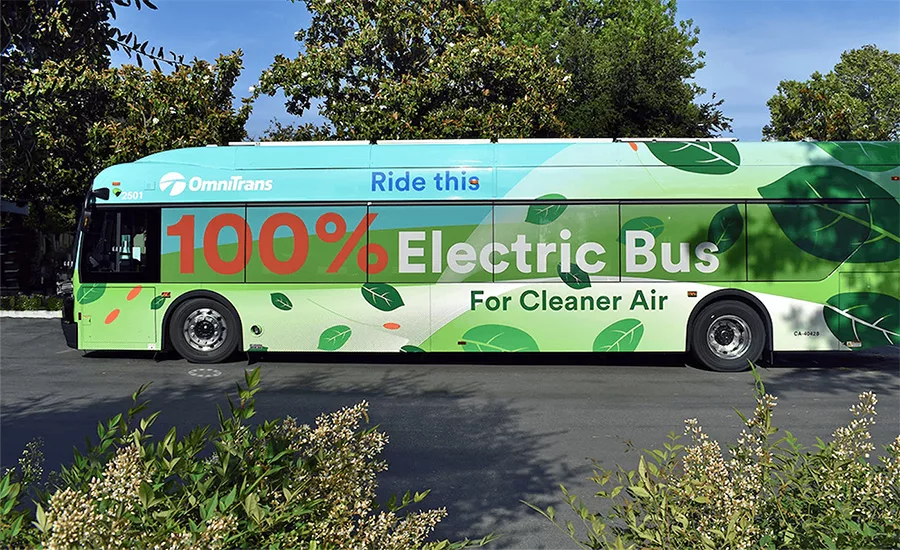
An OmniTrans battery-electric bus operates in San Bernardino County, Calif. California’s latest $1.1-billion transit funding package prioritizes zero-emission fleets and the charging, maintenance and utility infrastructure needed to support them statewide.
As California transportation agencies race to line up projects for early 2026 delivery, regulators have approved a $1.1-billion funding package that pushes new money into zero-emission transit fleets, rail infrastructure and long-delayed repair work with just weeks left in the year.
The action comes as state and regional agencies finalize year-end capital plans and position projects for procurement and construction, giving contractors and designers clearer visibility into where transit, rail and related infrastructure work is likely to advance next.
Because much of the funding is distributed through formula-based programs, the approved dollars are expected to move more quickly into vehicle orders, facility upgrades and construction activity rather than prolonged discretionary review.
Learn More: Senate Bill 125
Distribution List and Allocations
The California Transportation Commission approved the funding at its Dec. 4–5 meeting, allocating money across multiple programs that support transit fleet modernization, charging infrastructure, rail equipment and roadway repairs.
The package draws on both state and federal funding sources and is largely structured under state Senate Bill 125, the 2023 law that provides capital and operating support to transit agencies still working to stabilize service following pandemic-era ridership losses.
RELATED
Calif. OKs Funds for Vincent Thomas Bridge Upgrades and Other Stories
Gov. Gavin Newsom framed the funding as part of the state’s broader infrastructure and climate strategy.
“Donald Trump is asleep at the wheel on America’s infrastructure,” Newsom said in a statement announcing the approvals. “Meanwhile, California is moving forward. We are investing in zero-emission transit, safer roads and resilient infrastructure. That’s what Build More, Faster is all about: good-paying jobs and investments in our communities while delivering on our world-leading climate goals.”
Projects Move From Policy to Procurement
Among the higher-profile allocations in documents reviewed by ENR is $53 million to purchase 12 clean-energy locomotives for Southern California’s Metrolink commuter rail system, replacing older diesel units.
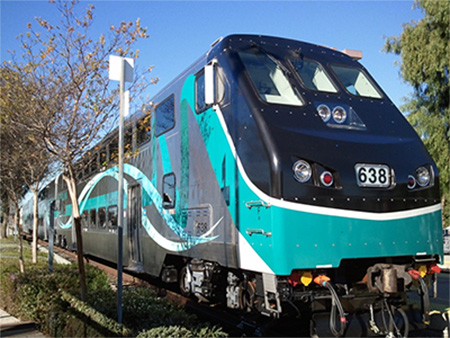
While the rolling stock itself will be procured separately, the investment is expected to generate additional work related to rail yard modifications, power systems and maintenance facilities as the new equipment is integrated into service.
Elsewhere, roughly $57 million was approved to repair a landslide-damaged section of State Route 1 near Lucia, work that will require slope stabilization, roadway reconstruction and drainage improvements along one of the state’s most environmentally sensitive corridors.
In Santa Maria, $9.5 million will fund construction of a new multimodal mobility center supporting regional clean-energy bus operations, including charging infrastructure, utility upgrades and passenger facilities.
California Transportation Secretary Toks Omishakin said the mix of projects reflects an effort to pair decarbonization with system reliability.
“Today’s investments show what it looks like when California chooses to lead with both urgency and intention,” Omishakin said. “By expanding zero-emission options and strengthening infrastructure in every corner of the state, we are delivering on Governor Newsom’s vision to build a modern, sustainable transportation system for all.”
Beyond marquee projects, the funding package includes dozens of smaller but construction-intensive awards moving through regional transportation planning agencies.
SB 125 dollars are being directed toward electric bus charging depots, hydrogen fueling facilities, transit maintenance yard upgrades, microgrids, station improvements and right-of-way work needed to modernize aging assets.
Learn More: Senate Bill 125
Program Structure, Intent and Funding Mechanics
Several regions are also using funds to replace diesel buses with battery-electric or fuel-cell vehicles, triggering ancillary civil, electrical and utility work.
Caltrans Director Dina El-Tawansy said the investments are intended to address growing pressures on transportation infrastructure statewide.
“The significant investments made today and throughout the year support Caltrans’ ongoing response to the effects of climate conditions on key assets, increased demand on the transportation system and our continued efforts to enhance mobility for all users,” she said.
The approvals come as Caltrans told commissioners this month that roughly one-third of the state’s $11.3-billion allocation capacity for fiscal 2025–26 has already been committed, reflecting both the pace of project delivery and competition for remaining funds.
Commission materials reviewed at the December meeting show hundreds of projects statewide moving through allocation, time-extension and right-of-way phases, pointing to a broad pipeline of active and near-term design and construction work.
California Transportation Commission Chair Darnell Grisby said the funding is intended to support affordability and competitiveness while advancing environmental goals.
“We are pleased to partner with Caltrans to enhance the economic competitiveness of our state and make commuting more affordable, while protecting our environment,” he said.
The $1.1-billion package signals sustained near-term opportunities tied to transit fleet electrification, charging and fueling infrastructure, rail equipment integration, right-of-way work and state-of-good-repair construction, even as agencies balance climate mandates with ongoing fiscal constraints.

Bryan Gottlieb is the online editor at Engineering News-Record (ENR).
Gottlieb is a five-time Society of Professional Journalists Excellence in Journalism award winner with more than a decade of experience covering business, construction and community issues, including finance, law and real estate. He has reported for Adweek and the San Diego Daily Transcript and led a community newsroom in Santa Monica, Calif. He served as editor-in-chief of the Detroit Metro Times and as managing editor at Roofing Contractor, where he helped shape national industry coverage. At Engineering News-Record, Gottlieb covers breaking news, large-scale infrastructure and megaprojects, regulatory developments and business trends across the U.S. and global construction sectors.
email: gottliebb@enr.com | office: (248) 786-1591