2025 East Best Projects
Best Energy/Industrial: Coastal Virginia Offshore Wind Landfalls and Trenchless Crossing
Coastal Virginia Offshore Wind Landfalls and Trenchless Crossing
Virginia Beach, Va.
BEST PROJECT
Submitted by Michels Corp.
Owner: Dominion Energy Virginia
Lead Design Firm: Burns & McDonnell
General Contractor: Wilson Construction Co.
Subcontractors: Behrens & Associates; J.D. Hair & Associates; Haley & Aldrich Inc.; Herrenknecht; In-Terra Innovations; Michels Construction Inc.; Michels Pipeline Inc.; Michels Trenchless Inc.
The 176-turbine, 2.6-gigawatt wind farm located approximately 24 nautical miles off the coast of Virginia is one of the largest wind projects in the U.S. At full operation, the system is designed to generate 2,500 to 3,000 MW of renewable energy, enough to power up to 660,000 homes.
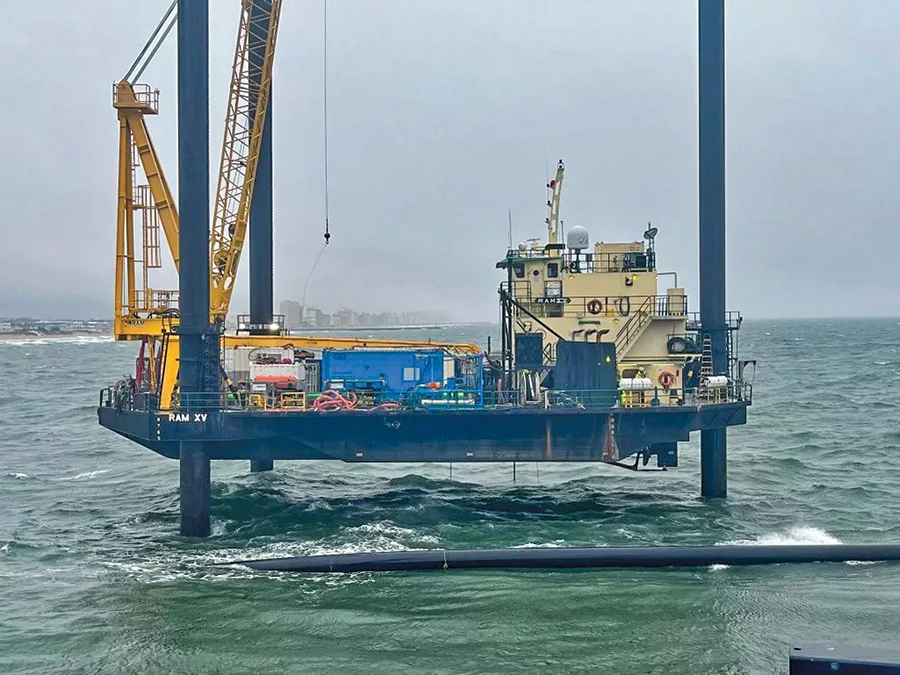
Trenchless methodologies played a key role in constructing nine landfalls and crossings of environmentally sensitive areas to provide electrical conduits to the turbines. Ten horizontal directional drills were used to cross sensitive landside areas to place 42-in.-dia steel casings from the beach to the ocean floor. The team then pulled bundles of 36-in. high-density polyethylene (HDPE) conduit inside each steel casing. Approximately 17,000 ft of HDPE pipe was placed inside the steel casings, which were then extracted, leaving the conduit in place.
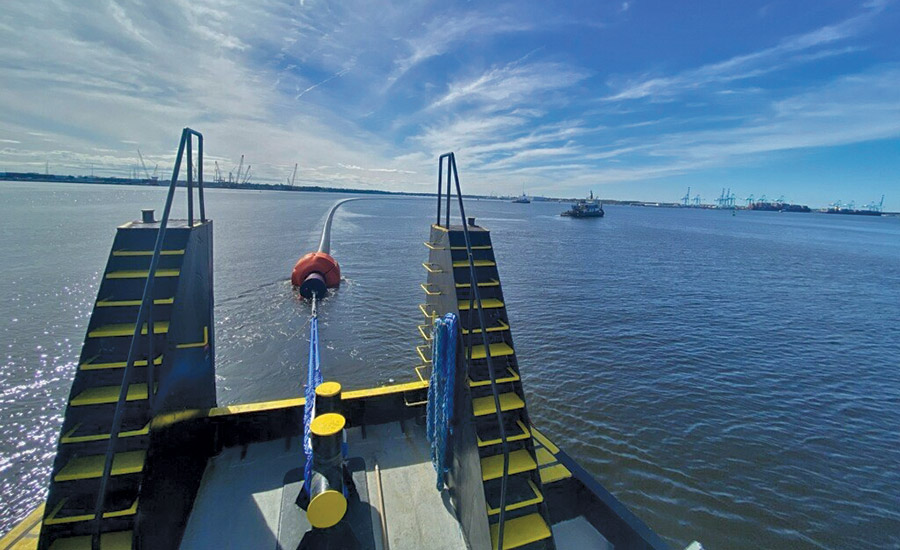
Photo courtesy Michels Corp.
During excavation of the entry pit for the trenchless construction equipment, the water table was found to be approximately 7 ft higher than previously anticipated, necessitating a change in the dewatering method. The presence of per- and polyfluoroalkyl substances (PFAS) in groundwater required construction of an onsite water treatment plant. Although this added to project costs and schedule, the project team was able to make up time by completing the landfall installations in shorter durations than scheduled.
Because of the jobsite’s location within a state military reserve, the project team coordinated work around semi-annual training exercises. That meant all time-critical activities that could not be interrupted had to be completed within each five-month working window, after which all equipment would be secured and contractor personnel evacuated. Strong communication among all stakeholders allowed seamless transitions before and after the shutdowns, allowing construction to remain on schedule. To minimize disruptions to nearby residential neighborhoods, the team installed sound walls and monitors to ensure noise and vibration did not exceed local ordinances.
The team had a 0.63 recordable incident rate and a zero lost-time accident rate during 319,665 worker hours.