2025 Midwest Best Projects
Best Cultural/Worship: The Joslyn Art Museum Expansion and Renovation
The Joslyn Art Museum Expansion and Renovation
Omaha
BEST PROJECT
Submitted by Kiewit Building Group
Owner: The Joslyn Art Museum
Lead Design Firm: Alley Poyner Macchietto Architecture
General Contractor: Kiewit Building Group
Civil Engineer: Olsson
Structural Engineer: TD2 Thompson, Dreessen & Dorner Inc.
MEP Engineer: Morrissey Engineering
Architect: Snøhetta
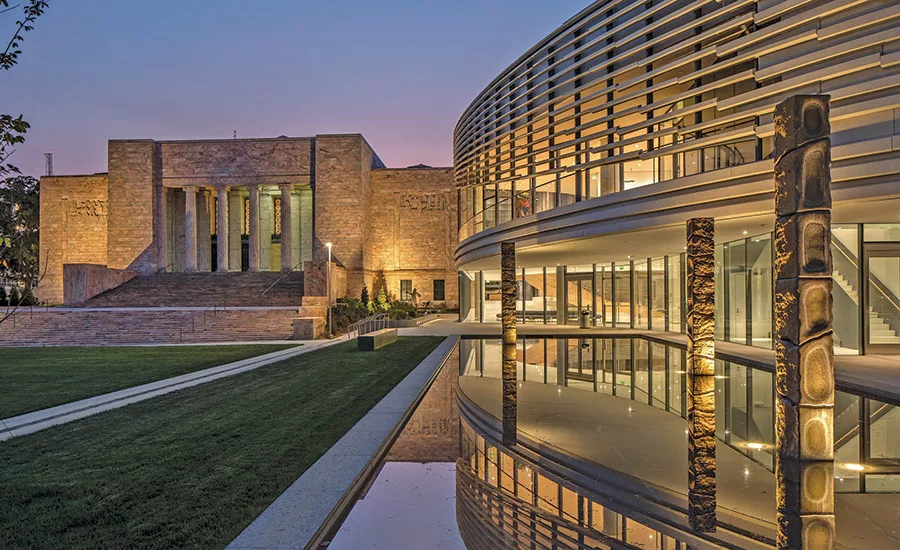
Nearly a century after its original Memorial Building opened in 1931, the Joslyn Art Museum in downtown Omaha embarked on an expansion that reimagines what a 21st-century arts institution can be. The expansion and renovation project, anchored by the new Rhonda & Howard Hawks Pavilion, doubles the museum’s gallery space, enhances community engagement and connects nearly a hundred years of architecture into one seamless experience.
The 42,000-sq-ft Hawks Pavilion bridges the museum’s 1931 Art Deco landmark and its 1994 addition with a sweeping glass atrium—a fluid, cloud-inspired form that reflects the vast skies of the Great Plains and symbolizes openness, connection and renewal.
Reopened in fall 2024, the reimagined campus houses new education studios, community gathering spaces and sculpture gardens, positioning Joslyn as a regional hub for cultural engagement and learning.
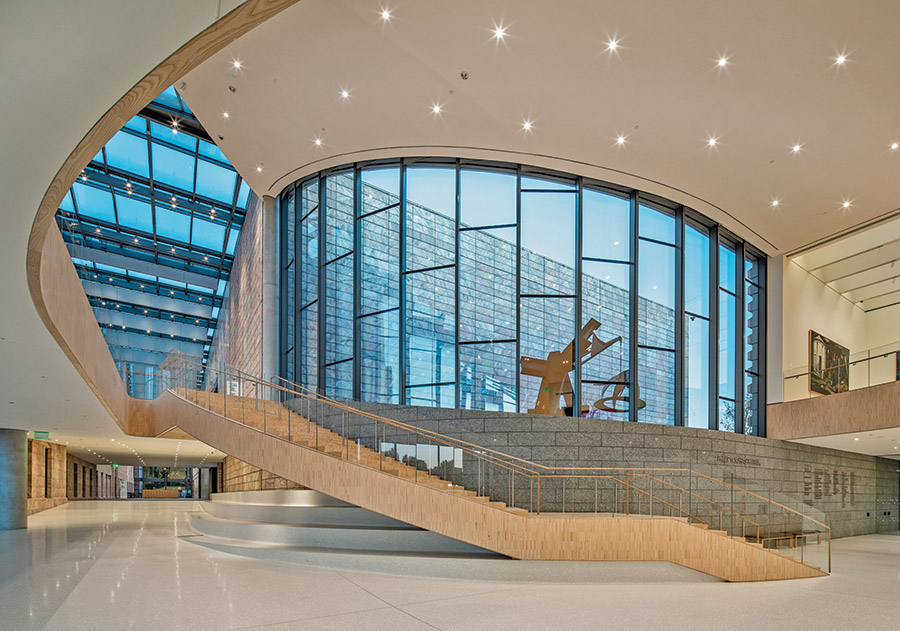
Photo by Kessler Photography
Building the new pavilion adjacent to historic and active museum structures required precision. Kiewit installed 100 auger cast piles within feet of the 1931 and 1994 foundations, using low-vibration techniques and real-time monitoring to safeguard artwork. The team also developed custom environmental controls for temperature and humidity to protect collections during construction.
The Hawks Pavilion’s sinuous geometry demanded custom steel fabrication, digitally modeled through advanced building information modeling (BIM). Its distinctive facade—composed of hundreds of custom precast concrete “baguettes”—required a year of prototyping and collaboration with concrete specialists to achieve the desired texture and tone.
Kiewit Infrastructure Engineers even developed a specialized erection sequence to safely install the pavilion’s massive cantilevered skeleton.
Despite pandemic-era supply disruptions and added project scope, the expansion was delivered on time and within budget through real-time cost tracking and continuous value engineering. More than 400,000 total work hours were completed on a building that brings art and community together.