2025 West Best Projects
Best Interior/Tenant Improvement: A&J El Monte Training Facility Tenant Improvement
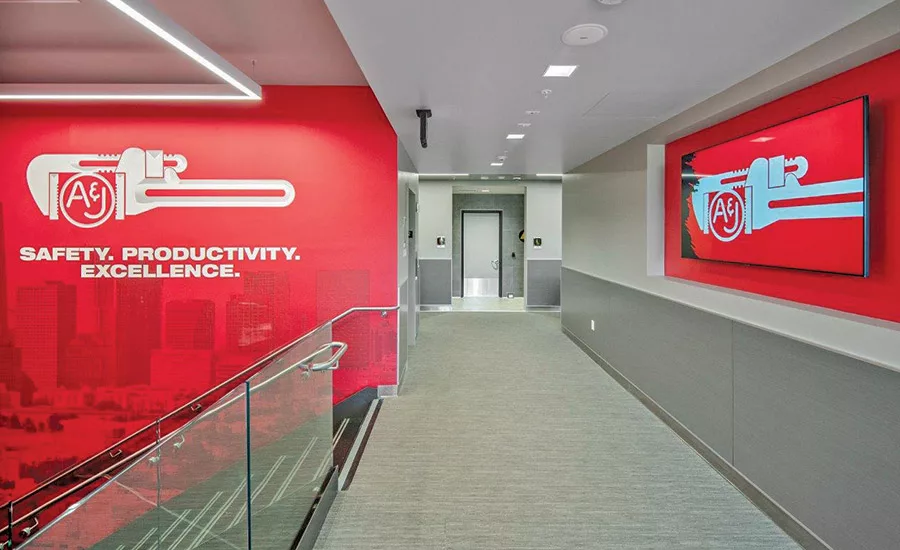
A&J El Monte Training Facility Tenant Improvement
Monte, Calif.
BEST PROJECT
Submitted by Swinerton Builders
Owner Apprentice and Journeyman Training Trust Fund
Lead Design Firm FCGA Architecture
General Contractor Swinerton Builders
Civil Engineer Tait & Associates
Structural Engineer BnB Associates Inc.
MEP Engineer OED Engineers
Landscape Architect Urban Oasis Consulting
Over the span of just four months, this renovation converted five existing buildings in El Monte into a state-of-the-art plumbing and piping training facility. Completed on time and within budget in November 2024, the project proceeded across two phases.
These one- and two-story industrial warehouse buildings were remade into plumbing training labs, classroom spaces and offices to consolidate multiple smaller facilities from around the Southern California region.
The campus features training modules and equipment, including mock restrooms, dirt pits for simulated underground pipe installations, welding booths, brazing tables, HVAC repair labs and an outdoor training area for landscaping and irrigation. In addition to supporting current training needs with the latest technologies and energy-efficient systems, the facility also includes flexibility to adapt to future program upgrades as the industry evolves.
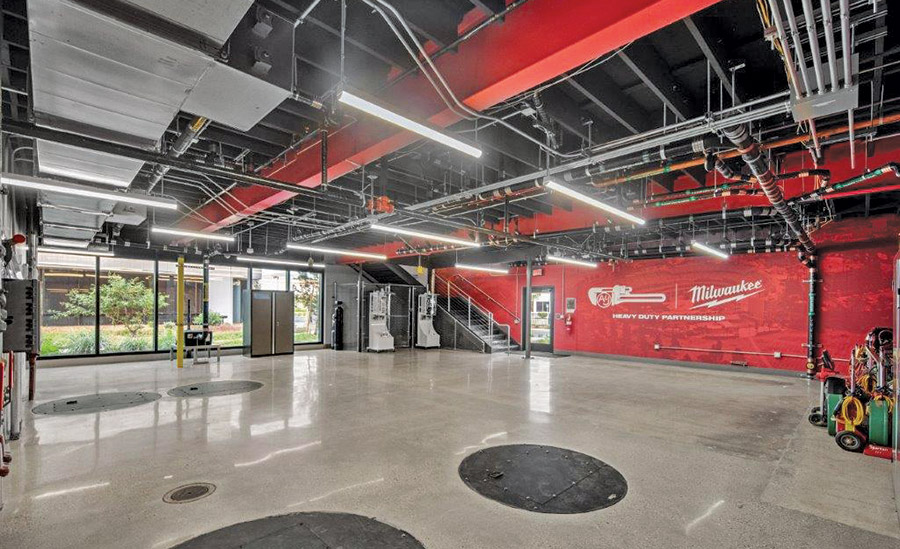
Photo by Jun Tang
Crews installed process and gas piping, including oxygen, compressed air, argon, chilled water and nitrogen pipes, which serve welding and brazing training booths. And for the underground pipe simulation areas, the team created below-grade structural concrete pits.
The project team reimagined the building shells to accommodate new rooftop equipment, increase live loads and create dynamic learning spaces to authentically simulate real-world jobsite conditions. To support other specified training needs, the team completed a full campus power upgrade, accelerated switchgear design and procurement, along with infrastructure to support full solar power systems on all five rooftops. Building facades and rooflines were also expanded, increasing the overall multistructure footprint.
To support all new mechanical, electrical and plumbing elements from the existing wood-framed roof structure, the team coordinated on a VDC overlay of the new MEPF design with existing field conditions, which provided a heat map of compromised roof members based on equipment and piping loads. This allowed the structural engineer to provide roof strengthening guidelines while also maintaining design intent for any exposed MEPF elements.