2025 West Best Projects
Best Interior/Tenant Improvement: San Mateo Science Center
San Mateo Science Center
Mateo, Calif.
BEST PROJECT
Submitted by Truebeck Construction
Owner Longfellow Real Estate Partners
Lead Design Firm/Architect/Structural/Landscape HOK
General Contractor Truebeck Construction
Civil Engineer BKF
Mechanical/Plumbing Western Allied Mechanical
Architect (Core/Shell) KSH
Interior Amenity Space Design Forge
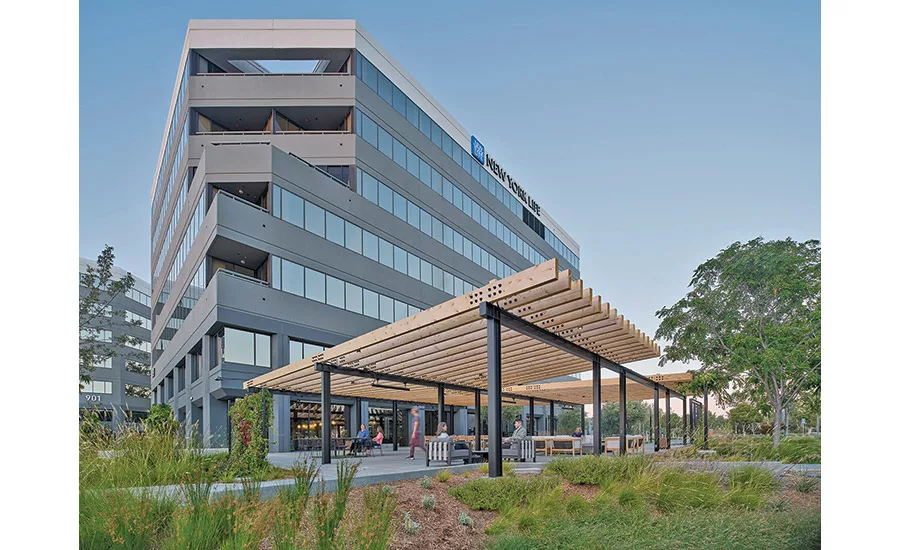
Two existing seven-story office buildings have been transformed into combined lab and office spaces, creating 262,000 sq ft of Class A facilities designed to support life science and biotech firms on this 429,000-sq-ft campus in San Mateo.
Scope of work included a comprehensive core and shell conversion and an upgrading of amenities, including a new café and fitness center as well as collaborative lounge and conference areas.
Crews completed demolition and sitework and built two new central utility plants (CUPs) that will provide utilities for essential lab operations. Onsite parking is equipped with electric vehicle charging stations.
The science center was completed under budget and ahead of schedule in July 2024, in part thanks to a highly collaborative scheduling approach that leveraged trade partner strengths to coordinate critical project elements such as the roof and CUPs. A Primavera P6 critical path method schedule aligned high-level planning, communication and as-builts, while a pull planning process led by onsite trade foremen generated a four-week lookahead.

Photo by Bruce Damonte
When completing the 12 floors of speculative lab tenant improvements, the team used the sixth-floor space as a prototype, which allowed for design and coordination issues to be resolved early. Although this method initially delayed progress on the upper floors, it actually accelerated the overall schedule and ensured consistent results.
One occupied floor remained fully operational while renovations went on throughout the two buildings, requiring detailed access and logistics planning to avoid disrupting that floor’s activities. Crews implemented barricades with clear signage, overhead protection and dedicated elevator use.
To ensure community satisfaction and to be a good neighbor, the project team implemented several enhancements, such as relocating CUPs to the most inconspicuous location on campus and enhancing acoustics with taller walls and higher-end equipment. Crews also remained conscientious on construction times and noise levels and built elements where necessary to avoid visible glare or reflection.