2025 Southwest Best Projects
Best Project, Renovation/Restoration: Grand Hyatt Scottsdale Resort
Grand Hyatt Scottsdale Resort
Scottsdale, Ariz.
BEST PROJECT
Submitted by RSP Architects
Owner Xenia Hotels & Resorts
Lead Design Firm Wimberly Interiors
General Contractor Balfour Beatty Construction
Civil Engineer Kimley-Horn
Structural Engineer PK Associates
MEP Engineer EXP
Architect RSP Architects
Built in the 1980s and in need of a major update, the 27-acre resort underwent a $110-million renovation that upgraded nearly 500 guest rooms and casitas, food and beverage outlets as well as other amenities. To keep the resort open and functional throughout construction, the project team had to act quickly to address unexpected issues such as damage from indoor water leaks without compromising the overall schedule.
A main component to the project was the complete transformation of the existing lobby bar area, which features a large grand staircase that provides a first impression of the property. To bring the stairway into compliance with new building codes, the team modified floor finishes and replaced recessed frameless glass handrails with new stone finishes.
Throughout the process, team members added their own expertise to help ensure an outstanding outcome. For example, the multifunctional lobby was designed to be a guest hub, featuring a variety of spaces to ensure round-the-clock activity. To meet the owner’s desire to foster a separate experience for the space’s new signature restaurant, the team created a metal wood and acrylic feature wall and pivot doorway that elevates the originally planned portal, allowing the restaurant to be further delineated from the rest of the lobby. This feature also allows the lounge and restaurant to be fully closed from the lobby when needed. The result is an elegant, vibrant and elevated guest experience that celebrates the site’s history and context.
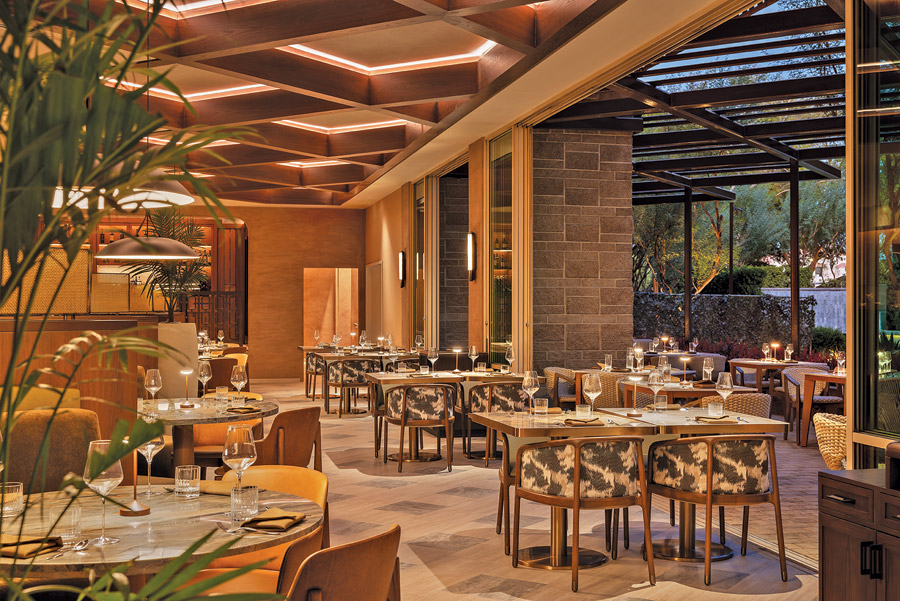
Photo by Donna Dotan, courtesy of Xenia Hotels & Resorts
Additional challenges came with the various new food and beverage outlets that were being added or upgraded. With some strategic planning, the team was able to upgrade the kitchen hood system to fit and operate within an existing space that was previously used as storage. To maintain the schedule, creative solutions had to be employed to ensure the project stayed on track.
For example, because of the long lead time for the prominent ceiling light fixtures, new flooring had to be installed prior to completion of overhead work, which is not ideal. The team met this challenge head on and ensured that all floors were protected during construction with little to no damage or replacement required at completion.
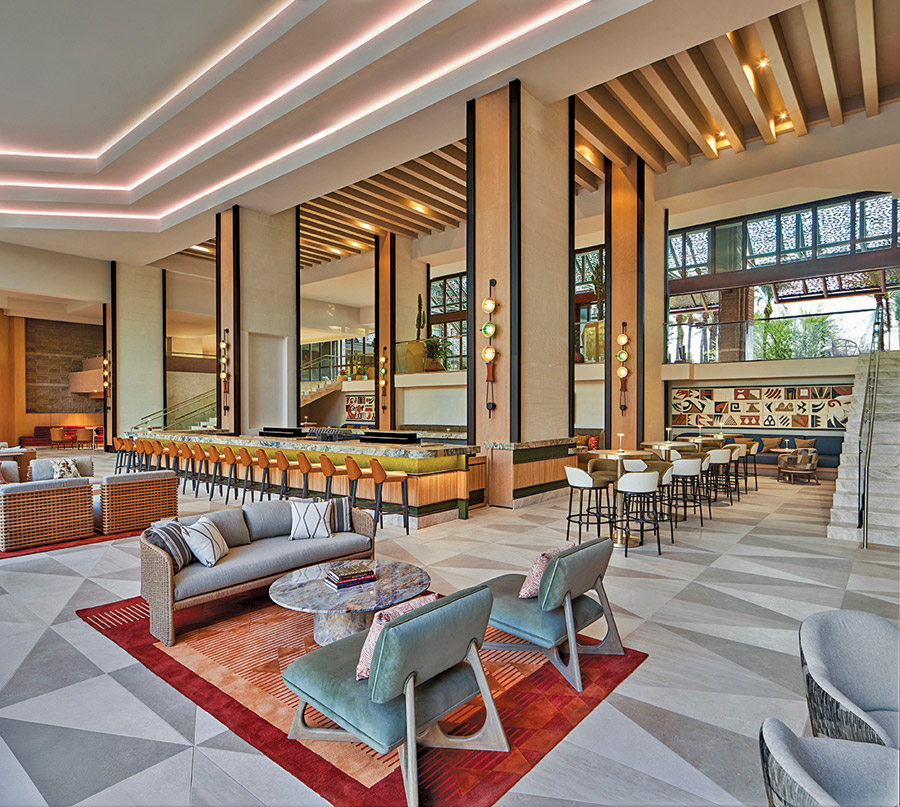
Photo by Donna Dotan, courtesy of Xenia Hotels & Resorts
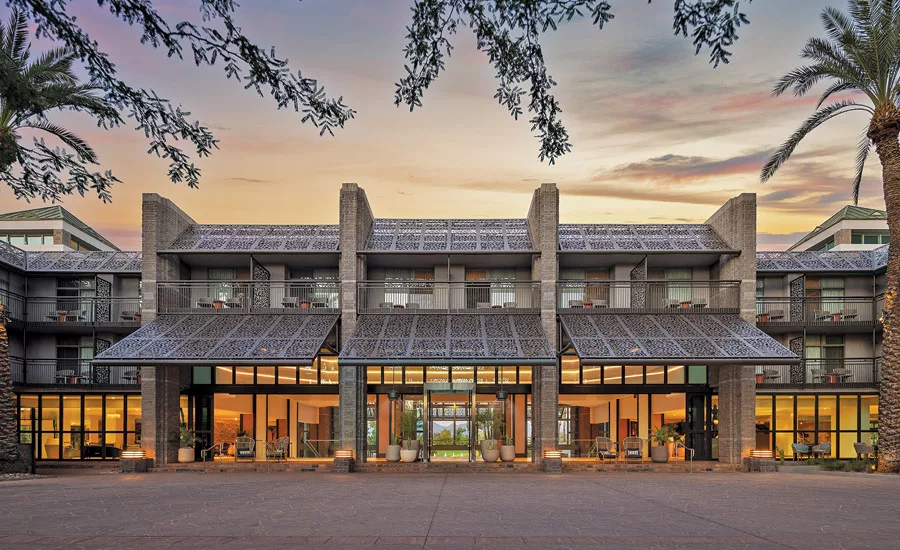
A major aesthetic component to the transformation is the addition of shade canopies along the facade. Formerly a beige awning with teal structure, this feature was modernized with an elegant metal panel. Many configurations and materials were studied before the final panel was selected. This unifying element on the exterior helps signify the transformation that has happened inside, projecting a sleek and contemporary aesthetic to all who visit.
There were no safety incidents involving construction workers, hotel staff or guests during this complex renovation while the hotel remained fully operational. Through diligent coordination and communication with the hotel staff, safe paths of travel were created for the hotel guests and staff to access the open areas of the hotel during the renovation. Paths of travel were created using scaffolding, barricades and detailed directional signage. Constant monitoring by Balfour Beatty staff was needed to ensure the general public did not access the construction zones.