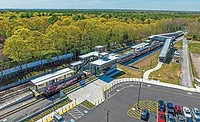
Award of Merit, Safety, Airport/Transit: South Central Extension / Downtown Hub
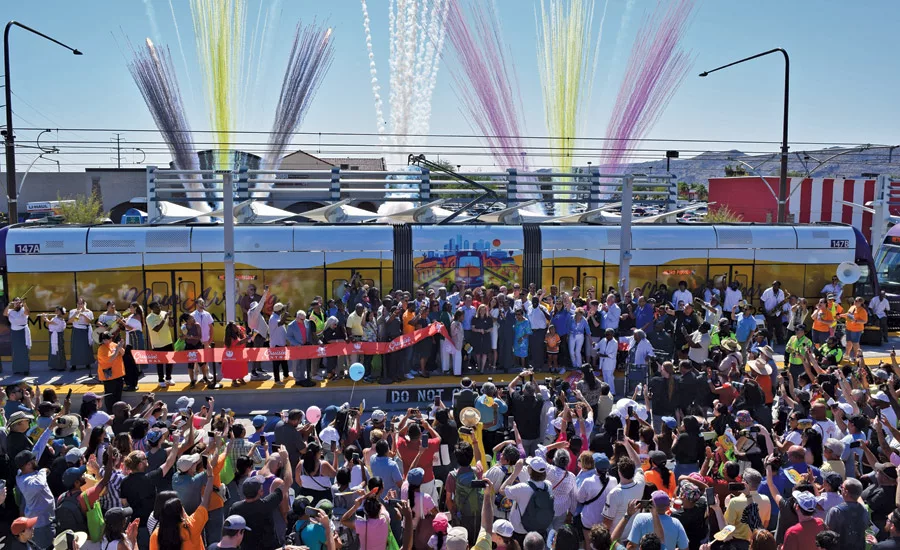
South Central Extension / Downtown Hub
Phoenix
Award of Merit, Airport/Transit, and Award of Merit, Safety
Submitted by Kiewit Construction West Co.
Owner Valley Metro
Lead Design Firm / Civil & Structural Engineer AECOM
Construction Manager Kiewit Construction West Co.
Project Manager Infenix
MEP Engineer & Systems Designer PGH Wong Engineering
A transformative 5.5-mile expansion of Valley Metro’s light rail system connects downtown Phoenix to South Phoenix via Central and 1st avenues. Featuring 12 new stations—including a multimodal Downtown Hub—and a 110-space park-and-ride, the extension introduces a two-line system that dramatically improves regional mobility and rider connectivity.
Public input shaped all facets of the light rail expansion, which overcame numerous challenges, such as the discovery of more than 102,000 culturally significant artifacts, all of which were carefully recovered in partnership with local tribal communities.
At the time of award, the project was approximately 15% designed, and this created opportunities for early collaboration between Valley Metro, Kiewit, AECOM and PGH Wong. A multiday facilitated value engineering workshop produced 197 concepts, several of which led to significant cost savings. These savings included $20 million by optimizing Salt River Bridge loading, $4 million through the use of universal track crossovers instead of double crossovers and $2.3 million by raising transmission poles rather than converting to underground.
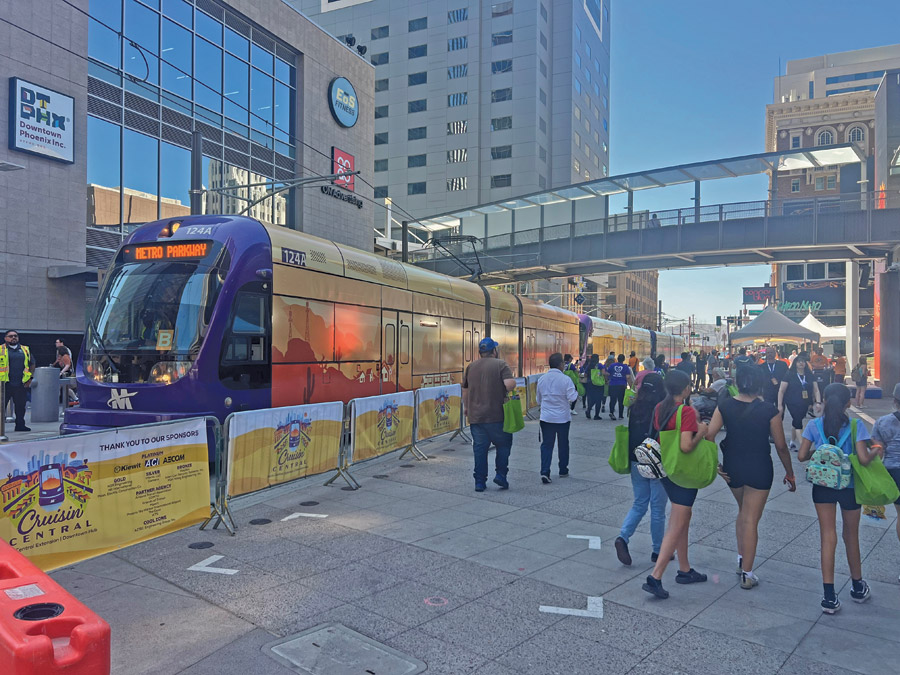
Photo courtesy Kiewit and Valley Metro
Just as importantly, the workshops helped define project scope to create better functionality and avoid future impacts—such as including the 3rd Avenue loop and Downtown Hub stations to enable a two-line system and minimize long-term disruption.
During construction, a variety of technology tools aided crews in tackling the challenging task of identifying, relocating and updating more than 220,000 linear ft of aging water, sewer and storm drains and other utility infrastructure in dense urban and historic areas without interrupting service.
To achieve the goal of no heat-related illnesses, the project team implemented a structured prevention program that included rigorous training for all personnel; designated hydration stations that provided shade, coolers, water and electrolytes; and mandated hourly breaks. The program also emphasized nutrition and self-care beyond work hours.
Supervisors conducted daily “fit for duty” checks during stretch-and-flex sessions to ensure workers were mentally and physically prepared.
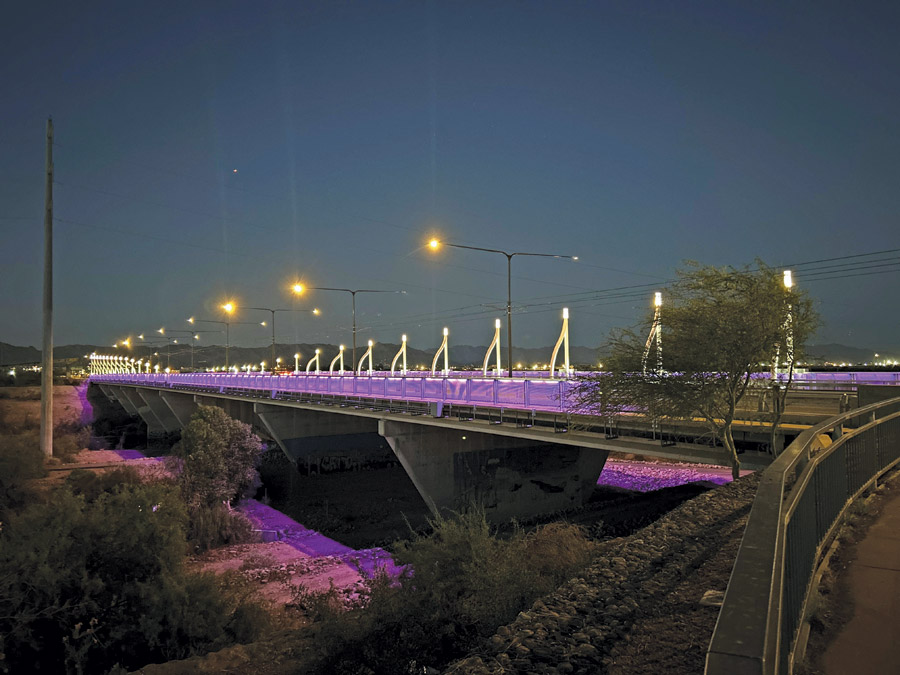
Photo courtesy Kiewit and Valley Metro
A mobile safety application also provided guidance for minimizing hazards during high-risk operations. Through these efforts, the team logged 4.8 million work hours with a recordable incident rate of just 0.28. Ongoing refinements to the safety program enabled the lead contractor to record 2.5 million hours of self-perform work over the project’s final 1,250 days without a single recordable incident.
To address a shortage of skilled labor, Kiewit and its partners launched a targeted workforce development program. Across the project, more than 1,900 new hires contributed over 3.8 million hours—including 107,000 apprentice hours and 432 individuals new to construction. A total of 75.5% of craft hours were performed by minority workers, and more than 500,000 hours were logged by residents in South Phoenix.
Opened in summer 2025, the project was completed one year ahead of its grant schedule and is projected to finish below the programmed budget.