Northern California Contractor of the Year: Hensel Phelps Leans on Culture
ENR West’s Northern California Contractor of the Year finds success from within
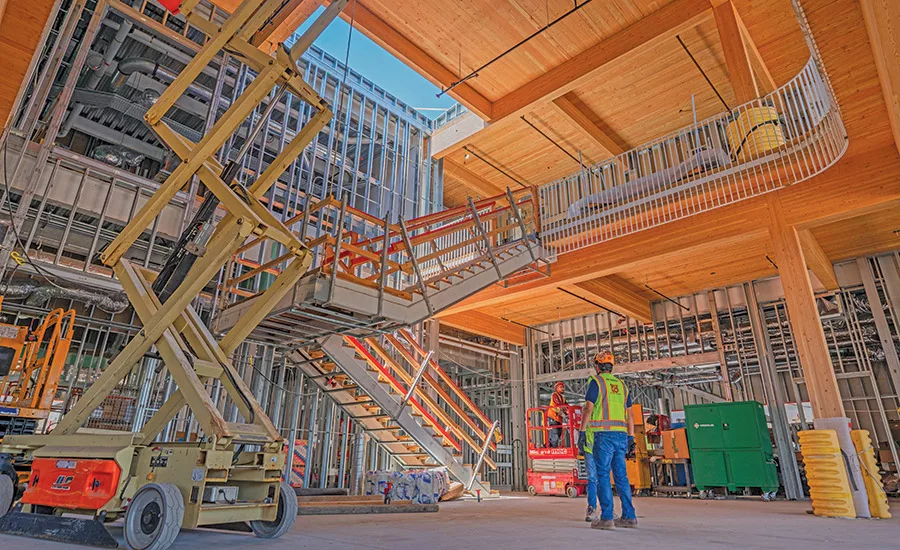
The UC Davis Resnick Center for Agricultural Innovation features a hybrid mass timber structure to reduce embodied carbon in the building and enhance the student experience.
A record revenue year, an enviable repeat-client rate, mastery of collaborative delivery and visible climate leadership headline Hensel Phelps Northern California résumé.
It’s a winning combination that stems from the 100% employee-owned company’s culture. “A working environment that’s enjoyable for the entire project team,” where safety, quality and innovation rise together, says Shannon Gustine, the firm’s regional vice president.
“We’re not out for individual ambitions—we focus on making sure the full project team is successful,” she says, adding that the company’s culture emphasizes safety, productivity and quality in equal measure.
Hensel Phelps’ culture of success helped drive 2024 regional revenue to $3.1 billion, landing the firm at the No. 3 spot on the Top Contractors list for the West region and earning the firm 2025 Northern California Contractor of the Year honors.
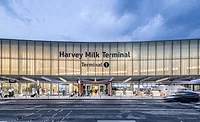
The Harvey Milk Terminal 1 north expansion at San Francisco International Airport (SFO) is the preeminent example of Hensel Phelp’s winning approach. The $2.5-billion expansion includes 900,000 sq ft of new concourses, retail and security space—delivered through progressive design-build. It is the world’s first terminal to secure LEED v4 Platinum, WELL Core v2 and Fitwel 2-Star certifications.
The sustainability achievements help clients attain California’s ambitious net-zero mandates but also help the firm hone its expertise in the field, says Todd Temple an operations manager in Hensel Phelps’ Northern California district.
At Harvey Milk, daylighting, acoustic treatments and that modular baggage system underpin the terminal’s triple-crown rating. SFO insisted passenger comfort remain “non-negotiable,” Temple says, because “happy passengers tend to spend more money, and that’s a win-win.”
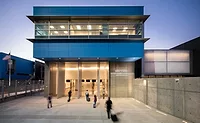
That mentality was also apparent with Sacramento’s all-electric May Lee State Office Complex, which was completed last year. Four mid-rises planned with architecture, planning and interior-design firm ZGF run on rooftop photovoltaics and heat-recovery chillers. The complex carries LEED Gold and SITES Gold plaques and is billed by the state as the largest zero-carbon office workplace in the U.S.
The certifications are certainly important but not as significant as the reaction of the client, says Wade Chance, operations manager at Hensel Phelps.
“When owners say the construction experience was actually enjoyable, that’s the ultimate compliment—and then they want to do it again,” he says. About 85% of last year’s backlog came from repeat clients, a ratio Chance calls “a healthy balance of loyalty and growth.”
That continuity anchors a slate that ranges from three confidential Silicon Valley tech campuses to the 34,000-sq-ft Resnick Agricultural Innovation Center at UC Davis.
Northern California contractors and asset owners alike have become the vanguard of progressive design-build, with Hensel Phelps entering six new contracts employing the delivery method last year.
The delivery method pairs a qualifications-based Phase 1 contract—usually at 10%-30% design—with a negotiated guaranteed maximum price once scope and risk are locked. The approach is moving from niche to norm: 76% of engineering firms now work on PDB jobs, according to a 2025 ACEC Research Institute survey.
“When you’re sitting across from an estimator, you’re also talking to someone who’s been a superintendent, a project engineer, a field engineer—someone who has done everything we do,” Temple says. “That breadth makes preconstruction far more effective.”
“We’re not out for individual ambitions—we focus on making sure the full project team is successful,”
—Shannon Gustine, Regional Vice President, Hensel Phelps
On Harvey Milk Terminal 1, weekly big-room sessions pulled trades, designers and airport staff into clash detection before steel went up. The coordination enabled an independent carrier baggage system that “shuts itself down in 3- to 5-foot increments when no bags are present, cutting energy demand roughly in half” and helped the final gates open exactly on schedule.
Prefabrication supplies a second lever. “Prefabricated MEP skids are run of the mill on all of our projects,” Gustine says. Offsite assembly, Temple adds, “gives better safety, tighter quality control … and you end up with a better finished product.” At SFO, complete pipe racks were trucked across the airfield overnight, easing congestion without disrupting passengers. Real-time, model-based quantity tracking feeds production metrics directly to owners, keeping surprises to a minimum and reinforcing what Chance calls an “open communication” ethic that surfaces risk early and “drives value into the project”.
At UC Davis, the Resnick Center mixes mass timber in public zones with steel in vibration-sensitive labs. Thornton Tomasetti pegs the hybrid frame’s embodied-carbon savings at about 38% compared with concrete. Lessons from May Lee’s electrified kitchens and SFO’s prefab racks inform the building’s all-electric HVAC and makerspaces, creating what Gustine calls “a feedback loop of continuous improvement.”
Innovation extends to safety and technology. In 2024, the Associated General Contractors of America named Hensel Phelps the nation’s safest contractor. Meanwhile, Diverge, the firm’s venture arm, is piloting AI-guided logistics that trim truck idle time and qualify low-carbon concrete mixes on non-critical slabs.
Looking ahead, Chance talks of “continuous growth, both for the organization and our people,” while Temple is already applying SFO lessons to a new Construction Manager-at-Risk terminal at Monterey Regional Airport.
The team’s headline hope two years out is that Hensel Phelps continues to be a leader recognized for “advancing construction while leading on climate-smart delivery.”
Given a zero-carbon campus, a record-setting green terminal and a PDB backlog that stretches from Silicon Valley to the Central Valley, that headline already feels half-written.

Bryan Gottlieb is the online editor at Engineering News-Record (ENR).
Gottlieb is a five-time Society of Professional Journalists Excellence in Journalism award winner with more than a decade of experience covering business, construction and community issues, including finance, law and real estate. He has reported for Adweek and the San Diego Daily Transcript and led a community newsroom in Santa Monica, Calif. He served as editor-in-chief of the Detroit Metro Times and as managing editor at Roofing Contractor, where he helped shape national industry coverage. At Engineering News-Record, Gottlieb covers breaking news, large-scale infrastructure and megaprojects, regulatory developments and business trends across the U.S. and global construction sectors.
email: gottliebb@enr.com | office: (248) 786-1591