Bridge Conference Highlights Digital Delivery, Connecting Communities
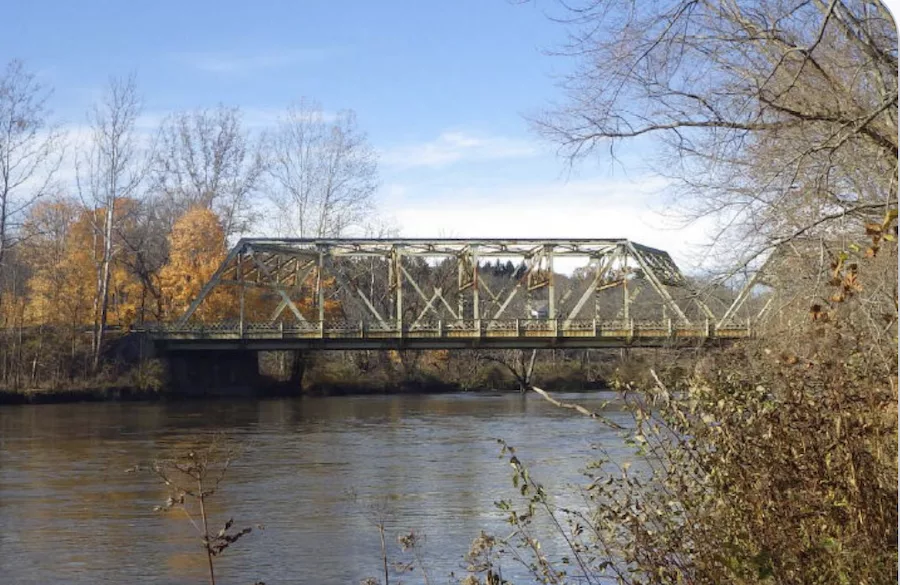
As part of PennDOT's digital delivery mission, a project to replace a bridge over State Route 6 is completely model-based.
Photo courtesy PennDOT
U.S. public works agencies such as the Pennsylvania Dept. of Transportation and the Pennsylvania Turnpike Commission are eyeing eventual full adoption of digital delivery for projects. While the open standard of industry foundation classes (IFC) is making its way into the civil infrastructure space, agencies are grappling with challenges including interoperability, proprietary platforms and information exchange.
PennDOT launched an initiative including many pilot projects and has achieved the goal by this year of allowing construction projects to be bid using 3D technology versus a traditional construction plan format. “It’s gaining organic momentum as we roll it out,” said Allen Melley, PennDOT chief of digital delivery, at the International Bridge Conference in Pittsburgh, held July 14-16. Pennsylvania was the featured state at IBC this year.
Interoperability between native data and IFC remains a challenge. In one example, the modeling of a bridge was initially “visually off,” noted Joe Brenner, BIM lead with Michael Baker International, one of the consultants working with PennDOT. However, he noted that a bridge project on State Route 6 was recently deployed as the first fully model-based contract.
The turnpike authority this spring completed a pilot project that utilized modeling for bidding through construction of a two-span prestressed box beam bridge, said Dan Rogers, chief bridge engineer with consultant RETTEW. Lessons learned included clearly defining the scope of work early on, adding a 3D task to the contractual language and meeting constantly to address learning curves, he added.
Providing the contractor with 2D plans to supplement the model helped increase the comfort level, he noted. “They kept asking, where’s the geotextile, the waterproofing?” he said. “They thought the model would be completely detailed.” Quality control inspectors also faced a learning curve with 3D modeling, he noted.
Ryan Rago, the turnpike’s project manager, added that there were issues with certain proprietary software programs during the bidding processes for the pilot projects.
Future projects will combine modeling for highway and bridge components, and it will eventually inform operations and maintenance, and asset management, he added.
The City of Pittsburgh is overhauling how it manages assets in the wake of the Fern Hollow Bridge collapse in 2022, said Zack Workman, the city’s chief deputy bridge engineer. “We began revisiting everything we knew,” he said. The city commissioned a new asset management program with WSP as consultant.
A bridge inventory overhaul found issues with outdated records, poor access to plans and even cases where it wasn’t clear who owned what asset, he noted. The city created a new bridge maintenance division. Workman noted that the Fern Hollow Bridge had 6 in. of paving overlay, not three, adding to the overall dead weight of the 446-ft-long rigid steel K-frame structure.
Thanks to the increased focus on inspections, the city found that drainage scuppers on the new bridge were already being compromised by foliage growth, which is now regularly cleaned out, he added.
Bridging Communities
The Interstate 35 project in Austin, Texas, calls for eight cap-and-stitch new bridges along four miles of the highway when it is relocated below grade, said Kasian Warenycia, senior bridge engineer with Arup. Those caps will create 30 new acres of public space including parks, concessions and a potential transit station.
The design team had to evaluate the weights of components that will sit on or use these bridges, such as trees, buildings, emergency vehicles and utilities, he noted. Moreover, during the projected 100-year design life, these components will change. Designers envision a utility corridor that branches out to amenities as needed and won’t require opening up the bridges when those amenities change.
Warenycia said two-story retail buildings with occupied roofs and 50-ft shade trees would be among the standard components to sit atop the bridges. Lightweight materials such as geofoam will be considered for the crossings, which will utilize prestressed concrete girders. The bridges will create “tunnel-like conditions” for the depressed highway, so issues such as ventilation, clearances and evacuation must be considered.
Perhaps the most important consideration is community participation, he said. Along the four miles, “we consider each specific neighborhood’s needs.”