EPA Approves 13-Acre PCB Landfill in Western Massachusetts
Construction begins on the facility designed by Arcadis will store 1.3 million cu yd of contaminated sediment from the Housatonic River
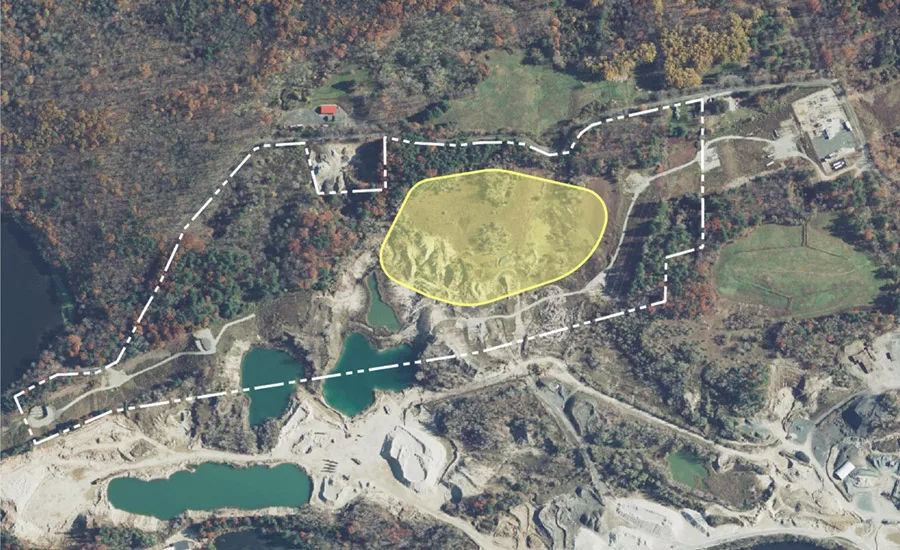
A map shows General Electric’s 13-acre landfill in Lee, Mass., including property boundaries and distance from a 500-year floodplain. The landfill will house 1.3 million cu yd of polychlorinated biphenyls (PCBs)-contaminated sediment from the Housatonic River.
After the Environmental Protection Agency approved a 13-acre landfill in western Massachusetts last month, construction is now underway on the facility that will contain 1.3 million cu yd of polychlorinated biphenyl (PCB)-contaminated sediment from the Housatonic River, according to General Electric officials.
A GE said in an email to ENR: “Construction of a modern, safe … facility is a critical first step in implementing the U.S. EPA-approved cleanup of the Housatonic River and its floodplains.”
PCBs, used by General Electric in manufacture of electrical transformers, were released into the river between the 1930s and the 1970s and have been removed in stages in decades since. In 2000, a consent decree required General Electric to clean up the river, and in 2020, the company was ordered to build a new landfill.
GE predicts that the site in Lee, Mass. will be completed by the end of 2027 and begin receiving sediment in 2028.