Legal
Doosan Bobcat Sues Caterpillar, Alleges Infringement of 14 Equipment Patents
US giant says it will defend its equipment and component designs and technology

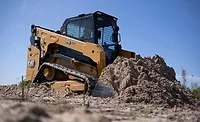
Caterpillar compact track loaders, such as the one seen here, are just one class of equipment that Doosan Bobcat alleges violates its intellectual property, but the U.S,-based rival is countersuing..
Doosan Bobcat North America has filed federal and international lawsuits against Caterpillar Inc., alleging patent infringement for components on skid steers, compact track loaders, excavators, wheel loaders, track loaders and bulldozers.
A lawsuit filed in federal court in Tyler, Texas which also names the largest Caterpillar dealer in Texas, HOLT CAT as a defendant, alleges that the equipment maker has infringed on Bobcat patents that include automated shifting of hydraulic drive systems, issued in 2016; variable engine control speed, issued in 2019; tracked utility vehicle, issued in 2019; system and method for defining a zone of operation for a lift arm, issued in 2019; and hydraulic power prioritization, issued in 2021.
The alleged infringements are just the surface of South Korea-based Doosan's 29-page complaint that extends to the 1947 founding of Bobcat by its original parent company, the Melroe Manufacturing Co. Doosan acquired the firm in 2007.
Doosan Bobcat essentially accuses Caterpillar of adopting technology and infringing on patent rights of products developed by Bobcat and other competitors over nearly eight decades. It also filed related lawsuits against Caterpillar in German district court and at the European Union's Unified Patent Court, according to Reuters.
In total, Doosan Bobcat says that 14 patents— including ones involving Sticksteer, Bobcat's remote joystick machine control, and E-fence, its geofencing safety software—need to be upheld. The patents also cover power performance and efficiency.
The complaint refers to Irving, Texas-based Caterpillar as a "late arrival to the skid-steer loader market," and notes it did not enter that sector until "about 1999." It alleges that Caterpillar tears down competitor equipment and reverse-engineers new equipment technology into CAD drawings that differ from those of the original manufacturer.
Aside from filing in the area where both Holt and Caterpillar are based, the Tyler-based Eastern District of Texas court has become a go-to location for intellectual property disputes with nearly one-quarter of such lawsuits last year filed there.
Bobcat vs Cat
Caterpillar has not yet released a statement responding to the lawsuit, but did file a response to a concurrent complaint that Doosan Bobcat filed with the International Trade Commission. Doosan Bobcat wants the commission to stop Caterpillar from trading its supposedly infringing skid steers, compact excavators, loaders, track loaders, bulldozers and components with other countries under Section 337 of the U.S. Tariff Act, which enforces intellectual property claims.
 Bobcat's X225 compact excavator, the first compact excavator to be produced in North America in 1989, is one of many patent's Doosan Bobcat is alleging Caterpillar, Inc., violated. Photo courtesy Doosan Bobcat
"Doosan Bobcat’s requested remedial orders would harm the U.S. public interest, undermine ongoing infrastructure projects, harm the economy in nearly every state and jeopardize national priorities ... [the court] should reject Doosan Bobcat’s attempt to use Section 337 as a cudgel," read the response from Caterpillar's law firm Kirkland & Ellis.
Both of Doosan Bobcat's legal actions seek damages "adequate to compensate for the infringement," an accounting and ongoing royalty payments for any post-verdict use of the technology, lost profits, attorney’s fees, and costs.
The federal court complaint filed in Texas states that “Bobcat has suffered and continues to suffer substantial damages,” but no specific dollar amount is disclosed in the public filings. Bobcat has requested a permanent injunction preventing Caterpillar from making, using, selling or importing any products that infringe on the patents it claims are being violated.
Not the First Time Caterpillar Challenged on Patents
Doosan Bobcat's complaint repeatedly references another recent patent case involving Caterpillar, Wirtgen America Inc. v. Caterpillar Inc. Wirtgen America, a maker of roadbuilding equipment, was acquired by John Deere in 2017. Shortly after, it alleged in a lawsuit that Caterpillar’s road-milling machines infringed several patents related to cold milling technology. A federal jury awarded Wirtgen $12.9 million in damages in that case and Judge Joshua Wolson added nearly $6.5 million more, also issueing a ban on sales of the infringing machines.
Wirtgen also filed a concurrent complaint with the International Trade Commission under Section 337 of the Tariff Act. The commission banned imports of Caterpillar’s infringing road-milling machines from 2019 until redesigned versions were allowed to be imported in 2021. Wirtgen and Caterpillar resolved the lawsuit in October 2024, but the case demonstrated actions by both federal courts and the commission in responding to patent disputes involving construction equipment that resulted in substantial damages and product redesigns.
While core technologies may be patented, key functionalities of construction equipment has always been a gray area for original equipment manufacturers, but involving the commission opens up the possibility that some Caterpillar models may be taken off the market until they are redesigned or see a delay in software updates until key features are sufficiently changed.
Patents in both cases cover advanced control systems and automation features that drive increasingly common uses such as 2D and 3D machine controls and site geofencing.
Caterpillar is expected to file responses to the complaints in coming weeks and the commission could make an initial determination on whether to pursue an investigation into Caterpillar.