2025 West Best Projects
Best Water/Environment: Georgetown Wet Weather Treatment Station
Georgetown Wet Weather Treatment Station
Seattle
BEST PROJECT
Submitted by Signal Architecture + Research
Owner King County Wastewater Treatment Division
Lead Design Firm The Miller Hull Partnership & Signal Architecture + Research
General Contractor Flatiron Dragados
Civil/MEP Engineer Jacobs; HDR
Structural Engineer Jacobs Engineering; HDR; Bright Engineering
Lighting Design Blanca Lighting
Artist Sans Facon
Public Art 4Culture
Community Engagement EnviroIssues
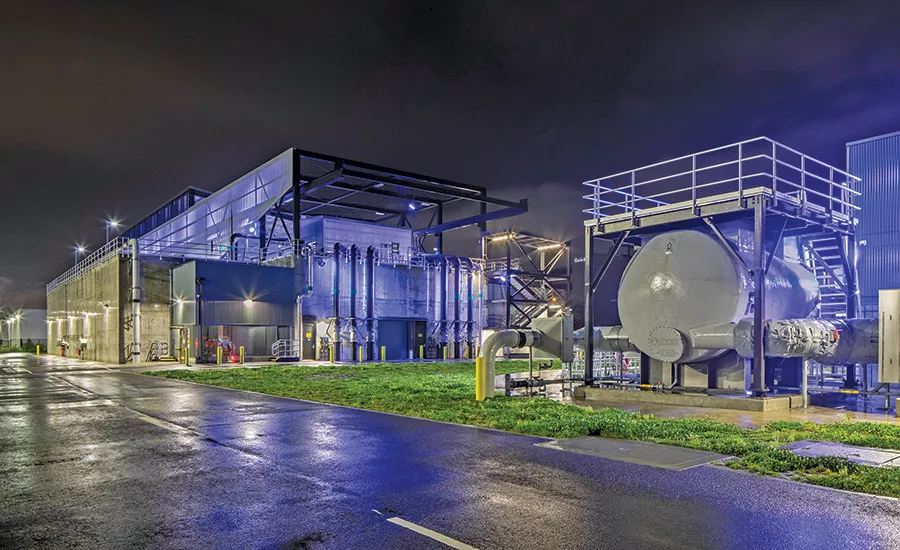
Rather than hiding behind fences, this wet weather facility sits prominently at the gateway to the Georgetown neighborhood, leveraging strategic site placement, architectural scale and integrated public art to communicate its mission to improve the ecological health of the Duwamish River.
The Theater of a Storm, a sequence of light-based interventions, tracks each treatment stage across the facility’s architectural forms, from intake to ultraviolet disinfection, rendering visible what would otherwise remain hidden.
Fitting a highly technical treatment facility into just 2.5 operational acres posed multiple challenges. The design team responded by stacking buildings vertically, using gravity to move water through the system and dramatically reducing energy consumption, maintenance needs and physical footprint.

Photo by Lara Swimmer
Geotechnical upgrades were also critical due to the high water table. Liquefaction-prone soils that turn to quicksand during earthquakes required ground reinforcement with stone columns to create solid bearing for heavy processing buildings. A 35-ft-deep concrete slab anchored the underground 100-ft-deep, 100-ft-dia equalization basin, resisting groundwater buoyancy. Crews installed secant and sheet piles before excavating through contaminated soils, sequencing earth-retention structures and turbidity curtains to protect adjacent waterways.

Photo by Lara Swimmer
Processing up to 70 million gallons of combined rainwater and wastewater daily during approximately 20 annual storm events, the project significantly reduces Duwamish River pollution. The project also achieved more than 85% waste diversion, reusing wood in interior finishes and recycling concrete for subgrade fill.
In recognition of its social, economic and environmental benefits, the project earned Washington state’s first Platinum Envision certification.