2025 West Best Projects
Best Higher Education/Research, Excellence in Sustainability: Washington State University Vancouver Life Sciences Building
Washington State University Vancouver Life Sciences Building
Vancouver, Wash.
BEST PROJECT, HIGHER EDUCATION/RESEARCH, and EXCELLENCE IN SUSTAINABILITY
Submitted by Andersen Construction Co.
Owner Washington State University
Lead Design Firm SRG+CannonDesign
General Contractor Andersen Construction
Civil Engineer Harper Houf Peterson Righellis Inc.
Structural Engineer Catena Consulting Engineers
MEP Engineer Affiliated Engineers Inc.
Electrical Engineer Samata Consulting Engineers
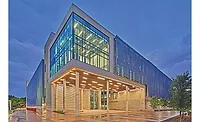
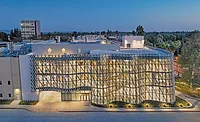
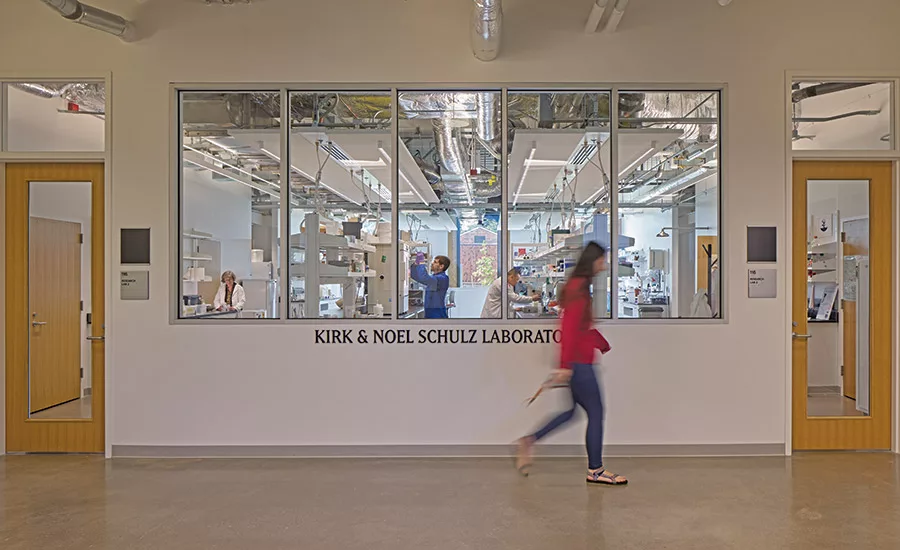
This $57-million, 55,000-sq-ft instructional and research facility is the university’s first new academic building in 11 years. It is home to cutting-edge teaching and research labs for neuroscience, molecular biology and nursing. It also has specialized greenhouses and vivarium space.
Since the building operates as a lab facility and must meet Washington’s strict energy code requirements, a heat recovery chiller (HRC) was installed and connected to the campus heating and chilled water loops. Integrating the HRC with both the building and campus systems required extensive team coordination.
During preconstruction, the team saved nearly $1 million by changing the building massing to take advantage of the site’s natural grade. Because the structure is on a hill, rather than building up for a third floor, the team excavated slightly more to create an additional floor below. The main entry presents as a single level building, creating a more inviting entrance. The building would have been 15 to 20 ft higher, which also would have obstructed views for nearby buildings.

Photo by Benjamin Benschneider
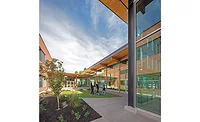
Locally sourced mass plywood and low-carbon concrete contributed toward the facility’s LEED Gold certification. Crews also ensured 61% construction waste diversion. Native and indigenous plants selected with Cowlitz tribe members ensure cultural representation.
Fully automated greenhouses feature ridge vents, sun shades, evaporative cooling, grow lamps and VRF systems monitoring atmospheric conditions for plant and butterfly research—all realized with the help of a specialty national greenhouse contractor. Meanwhile, the vivarium uses dedicated outside air and negative pressurization to maintain environmental control and ensure safety for research animals and personnel. The team brought on third-party commissioning agents to ensure these complex systems all functioned as necessary.
For the exterior wall assembly, the team chose to use mass plywood panels, which are similar to tilt-up panels with a pre-installed weather resistant barrier and precut window openings. All exterior mass plywood panels were installed in just two weeks, resulting in notable schedule savings—with the project completing several days faster than anticipated.