2025 East Best Projects
Best Water/Environment: Populatic Water Treatment Plant
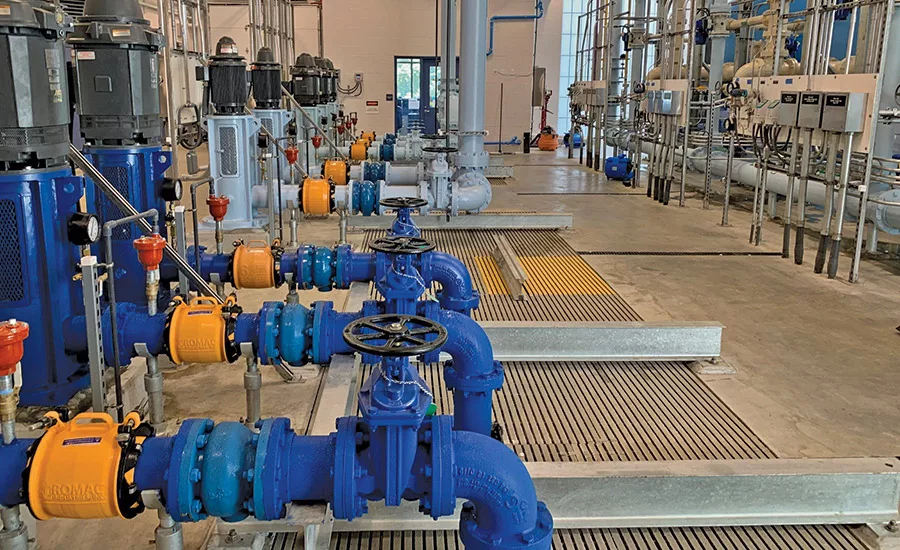
Populatic Water Treatment Plant
Medway, Mass.
BEST PROJECT
Submitted by Walsh Construction Co. II
Owner: Town of Medway
Lead Design Firm: Wright-Pierce
General Contractor: Walsh Construction Co. II
Structural Engineer: Wright-Pierce
Owner’s Counsel: Environmental Partners
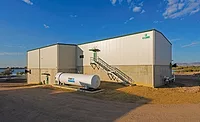
The $20.6-million project houses advanced water treatment equipment and support facilities and also has space for future treatment of per- and polyfluoroalkyl substances (PFAS), also known as forever chemicals. Although not required at the time of construction, the designated space and infrastructure to accommodate PFAS filtration will streamline future installation and testing and significantly reduce the cost, disruption and time typically associated with retrofitting treatment plants to meet evolving water quality standards.
This proactive strategy benefits the town of Medway and sets an example for other municipalities navigating similar emerging contaminant concerns. Beyond future-proofing, the plant also improves system redundancy, ensuring reliable water distribution for Medway residents even during high-demand or emergency conditions. The facility’s layout and treatment processes were developed with input from the town and end-users, prioritizing operational efficiency, safety and maintainability.

Photo by Tim Abely, courtesy Walsh Construction Co. II
Modular construction techniques and efficient material selections helped accelerate the construction schedule, with all work completed while maintaining uninterrupted service to the town’s water system. Safety challenges were mitigated through careful planning and coordination with trade union representatives. For example, the limited space at the front of the specialized filter vessels required special plumbing expertise to sequence installation of piping, valves and supports. Thorough work planning in collaboration with trade leaders ensured that this and other critical tasks were completed safely and efficiently. By the project’s end, the team had logged nearly 30,000 work hours with no injuries or recordable incidents.
The project also sought to minimize disturbance to surrounding homes, demonstrating a strong commitment to community impact and communication. When supply chain issues complicated procurement of the main electrical gear, the town and project team collaborated closely to identify alternative solutions and resequence work activities.