2025 West Best Projects
Best Manufacturing: Neogene NGF40
Neogene NGF40
Santa Monica, Calif.
BEST PROJECT
Submitted by HITT Contracting
Owner AstraZeneca Pharmaceuticals (Formerly Neogene Therapeutics)
Lead Design Firm/MEP Engineer George Butler & Associates (GBA)
General Contractor HITT Contracting
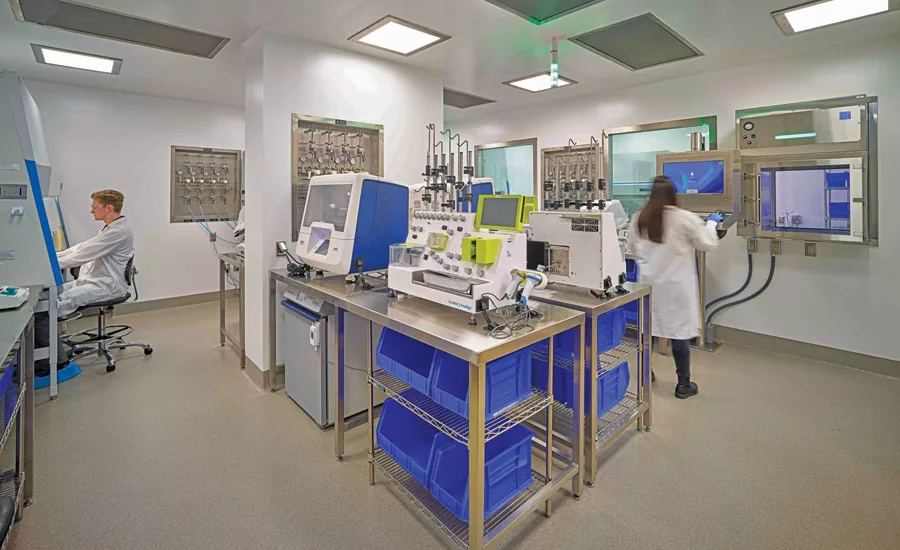
Designed to advance investigational drug development, this $7.6-million manufacturing facility will support AstraZeneca Pharmaceuticals’ (formerly Neogene Therapeutics) Phase 1 allogeneic cell therapy pipeline. The space houses two EU Annex 1-compliant Grade B processing suites, supporting both Phase 1 and Phase 2 clinical trials. One suite is dedicated to drug substance manufacturing—including cell harvest, purification and bulk filling—while the second suite supports final product formulation and fill-finish operations. Scope included complementary support areas as well, including cryopreservation and storage areas, a just-in-time materials warehouse, a quality control laboratory and gas utility storage space.
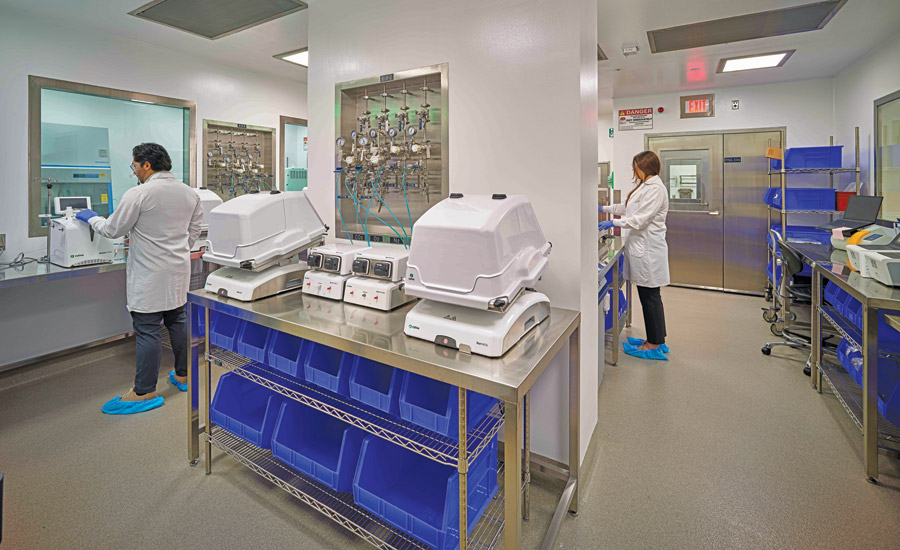
Photo by Weldon Brewster Photography
Each door in the facility requires power to integrate with the environmental monitoring system, building management system, automatic door interlocks, security card readers and the fire alarm system. As a result, the team had to install massive amounts of high/low-voltage wiring and each component required a different trade partner. Extensive coordination meetings and onsite layout sessions ensured proper execution.
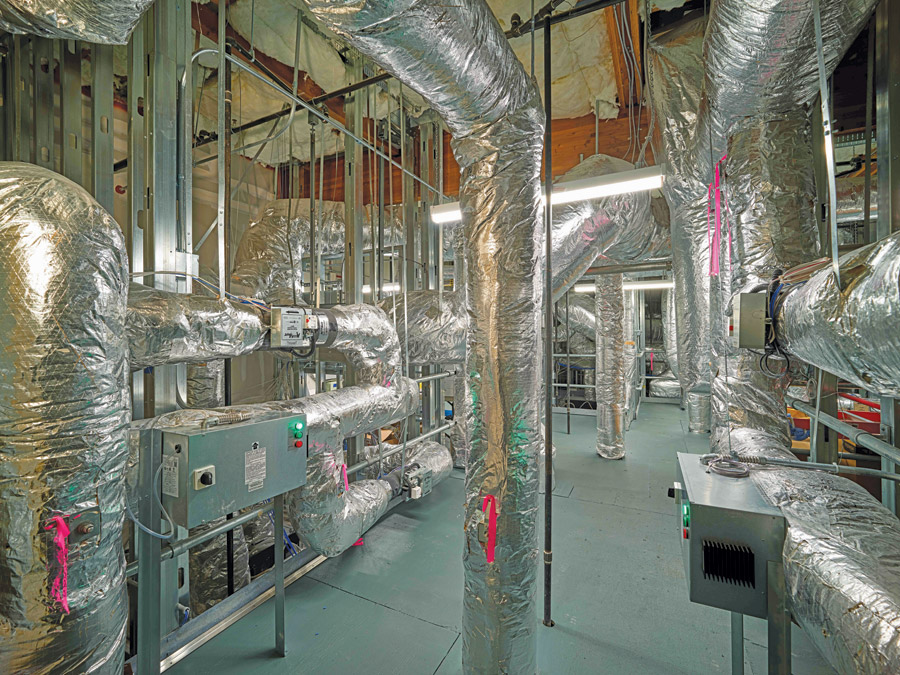
Photo by Weldon Brewster Photography
To optimize facility operations and future maintenance, a service mezzanine provides safe access to mechanical infrastructure without disrupting clean room environments. Crews also had to navigate an extremely limited footprint in which to install all utilities and infrastructure—just 3,500 sq ft. Space constraints meant materials were stored off site and there was no room for ladders, carts, job boxes or worktables. A detailed, trade-specific phasing plan assigned designated work areas to each trade on a weekly basis to ensure harmony among all crews.
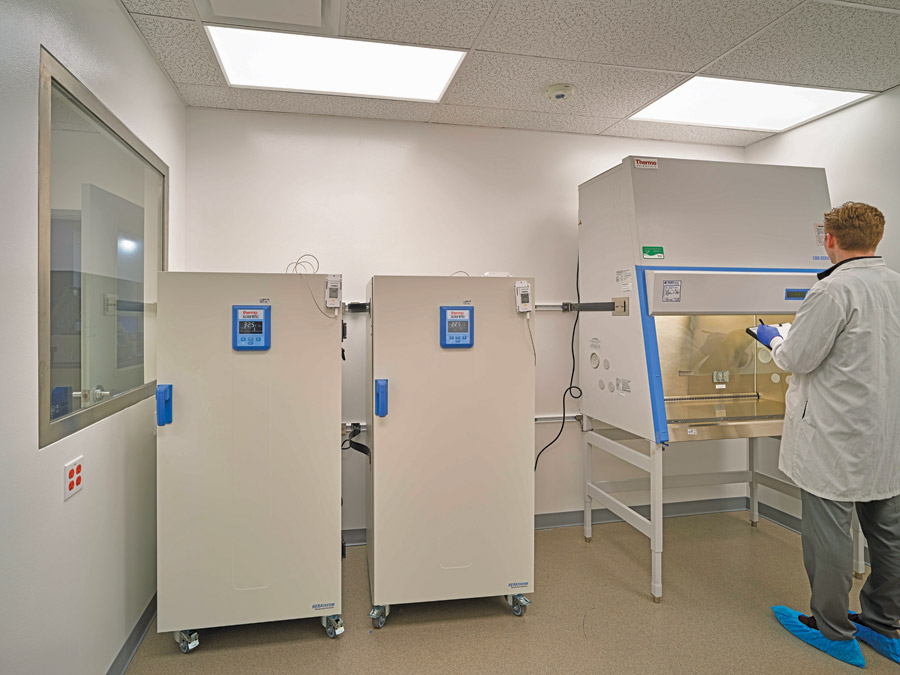
Photo by Weldon Brewster Photography
Within this same space, the team had to install a 25-ft-high overhead deck that required the use of scissor lifts. These were difficult to maneuver within the confined footprint after wall framing, which forced the team to plan not only horizontally but vertically. To manage this, project leadership strategically limited the number of lifts per trade and implemented a shared-use strategy.
When the team had to make a last-minute transition from compressed air to oxygen and nitrogen utility requirements, after equipment and piping had already been purchased and partially installed, the contractor proposed field-driven solutions that allowed modification to existing infrastructure with minimal rework. The project reached final completion after just eight months in November 2024.