2025 West Best Projects
Best Energy/Industrial: Sentinel Energy Center Battery Energy Storage System with Black Start

Sentinel Energy Center Battery Energy Storage System with Black Start
Hot Springs, Calif.
BEST PROJECT
Submitted by Burns & McDonnell
Owner Sentinel Energy Center LLC
Lead Design Firm/General Contractor/Civil/Structural/MEP Burns & McDonnell
Civil Sub-Contractor Ferreira Construction
Self-Perform Construction AZCO
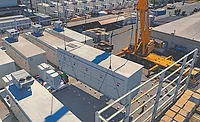
Black start capability enables a power plant to restore operations after a total loss of power. The novel application of that capability on a battery energy storage system (BESS) now allows this energy center to operate independently in a grid outage.
This 17-MW/35-MWh energy center is now one of the largest peaking generation plants in the U.S. It’s also the first time a BESS has black-started a GE LMS100 gas turbine.
Integrating BESS technology into existing infrastructure required highly coordinated engineering, system testing and stakeholder collaboration. It took just 13 days to tie the BESS into the plant’s electrical bus and meet contractual obligations with the California Independent System Operator.

Photo courtesy Burns & McDonnell
This black start project contributes to improved grid resilience, faster recovery from outages and long-term operational flexibility and reliability for a densely populated region. The facility can restart the grid and bring major baseload units back online after systemwide outages caused by extreme heat, faults or natural disasters without relying on traditional fossil fuel-based startup methods. Using batteries to provide this function avoids additional emissions and helps advance a more sustainable approach to grid restoration.
Due to the extreme summer heat in California’s Coachella Valley, project leadership strategically moved construction activities such as concrete placement to early morning hours to mitigate heat-related risks and maintain productivity. High winds also occasionally limited when critical equipment lifts could happen, so proactive scheduling and close coordination helped minimize any weather-related delays.
The design team engineered a solution that maintains the BESS at 100% charge at all times, enabling the plant to instantly respond to a blackout event. Unlike typical BESS applications that cycle daily, this system was custom-designed to remain fully charged long term, with degradation and capacity losses modeled and accounted for across a 10-year horizon.
This project was delivered within budget and ahead of schedule.