2025 Southwest Best Projects
Best Project, Highway/Bridge: I-15 Virgin River Bridge No. 1
I-15 Virgin River Bridge No. 1
Ariz.
BEST PROJECT
Submitted by Kiewit Infrastructure West Co.
Owner Arizona Dept. of Transportation
Lead Design Firm HDR Engineering
Construction Manager Kiewit Infrastructure West Co.
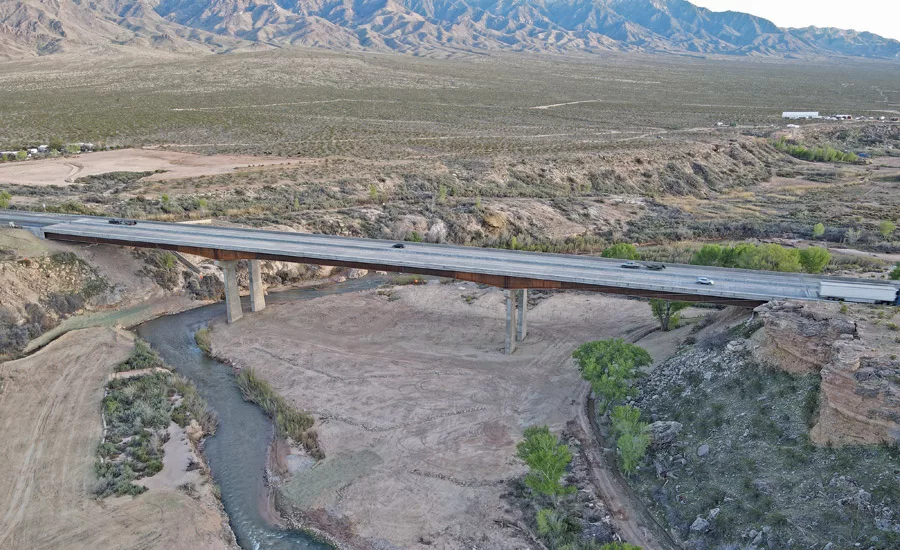
The project team replaced a deteriorating five-span structure built in the 1960s with a three-span configuration. Utilizing Arizona’s longest single-span steel girders at 340 ft, this design reduced the number of river piers, minimizing environmental disruptions and simplifying construction logistics. The critical infrastructure upgrade took place along a heavily traveled interstate that connects California, Nevada, Arizona and Utah. The aging bridge had deteriorated significantly, with structural cracks posing safety risks to thousands of daily travelers—primarily commercial trucking traffic traversing the remote Virgin River Gorge.
The $58.5-million effort posed exceptional challenges due to its location in the narrow canyon more than 80 ft above an active river as well as its limited access, extreme weather and a lack of viable traffic detour options.
Because a full closure for construction was not feasible, the team developed a phased plan that shifted traffic into a 1-and-1 configuration while safely demolishing and rebuilding the bridge in halves.
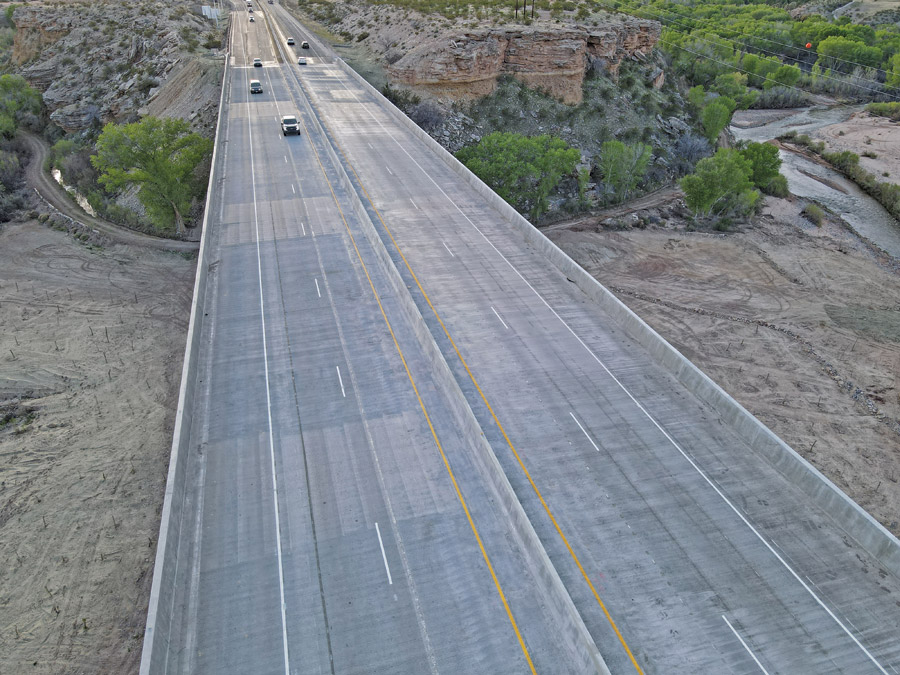
Photo courtesy Kiewit
This strategy minimized public disruption and eliminated the need for lengthy truck detours. Two central piers were built within cofferdams—a rare technique in Arizona—allowing construction to continue safely during fluctuating river conditions. Advance planning for a 10-year flood threshold paid off when a seven-year flood event damaged the construction pad. Because the temporary trestle remained intact, the contractor was able to resume work with minimal delay.
Hazardous materials on the existing bridge also required careful handling. To prevent river contamination, girders were manually unbolted and removed using containment systems rather than traditional torch-cutting methods. To combat salt-laden snow runoff, silica fume concrete incorporated in the new bridge deck reduces chloride permeability, extending the structure’s lifespan and lowering long-term maintenance costs.
As part of the extensive safety plan for the project, routine drone footage and time-lapse video gathered for documentation also helped identify potential safety issues early. A smart work zone with digital signage and traffic sensors provided real-time speed feedback and warnings to motorists, enabling the team to adjust site operations based on traffic behavior. A custom mobile app that integrated with several GPS navigation services also delivered real-time updates regarding work activity and lane shifts.
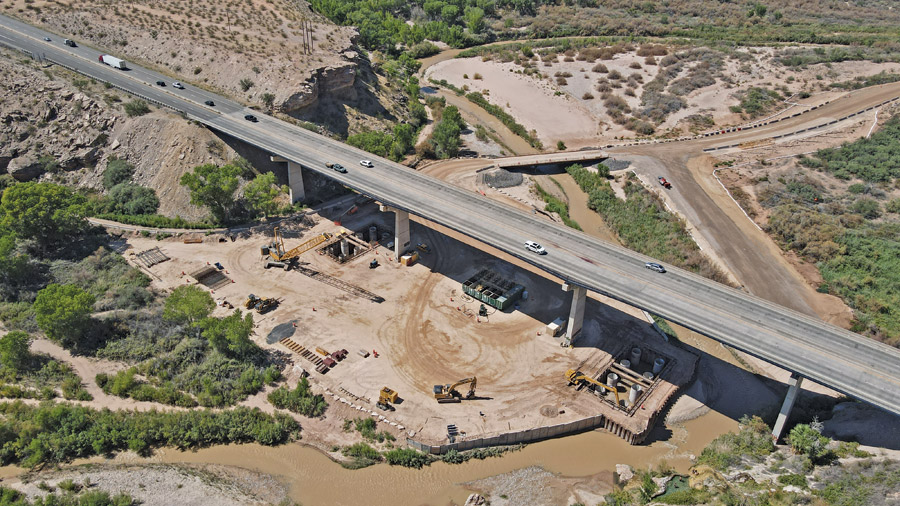
Photo courtesy Kiewit
Recognizing the fall hazards posed by the bridge height and deep cofferdams, Kiewit instituted specialized work-at-height training, continuous monitoring and redundant tie-off systems. Workers inside cofferdams received custom safety orientations, and all high-risk operations were overseen by competent safety professionals.
As a result of these efforts, no injuries or major incidents occurred during the 39-month project.
The bridge now stands as a state record holder in span length and a model of environmental sensitivity, technical innovation and construction management. It also serves as a vital artery for regional commerce, recreation and tourism while delivering long-term reliability and safety for motorists traveling through this remote corridor.