2025 Southwest Best Projects
Best Government/Public Building: Defense Threat Reduction Agency ABQ Administrative Office
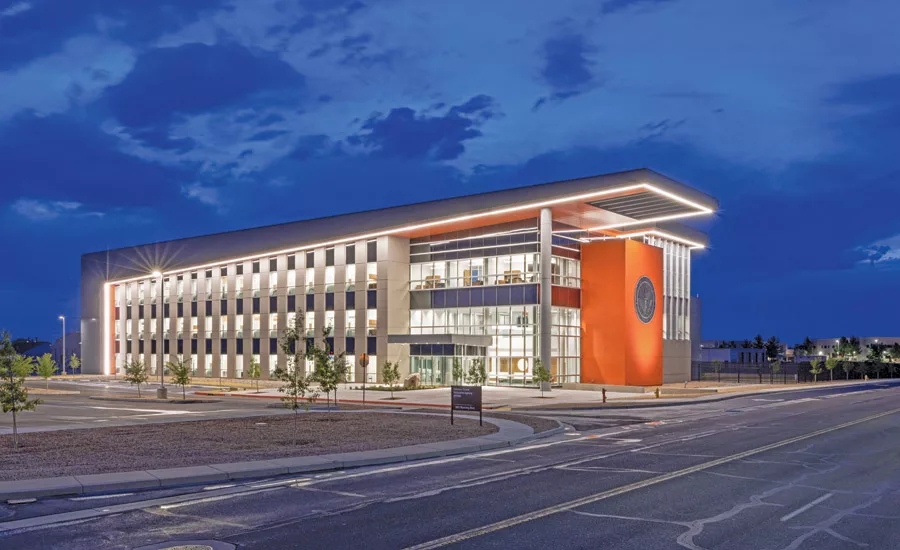
Defense Threat Reduction Agency Albuquerque Administrative Office
Albuquerque
BEST PROJECT
Submitted by Hensel Phelps Construction
Owner U.S. Army Corps of Engineers, Albuquerque District
Lead Design Firm/Civil, Structural, MEP Engineer Jacobs
General Contractor Hensel Phelps Construction
Key Subcontractors BB Construction Management; Berg Electric Corp.; Bixby Electric; C&C Demolition; Centimark Corp.; Coreslab Structures; KFI Engineers; Peerless Construction; Southwest Glass & Glazing; Structural Services
This three-story, 77,000-sq-ft facility consolidates operations that were previously housed in World War II-era dormitories, creating a high-tech workspace tailored for classified research and collaboration. Features include open and private offices, collaboration areas and meeting rooms, a centrally located sensitive compartmented information facility (SCIF) for classified work and a seismic laboratory.
The project team tackled multiple challenges during the 30-month construction phase. These included mitigating cost escalations and lead times for critical components, facilitating efficient concrete deliveries from an offsite batch plant and performing difficult demolition work that included dismantling and removing aircraft tie-down anchors set in large concrete blocks.
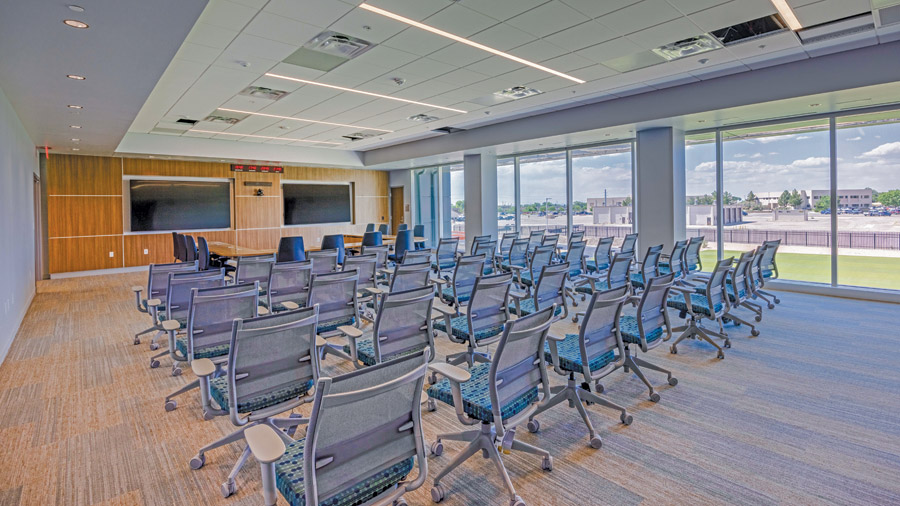
Photo by Matt Oberer
The proximity to an international airport extended Federal Aviation Agency (FAA) review periods, posing risks to the needed relocation of high-voltage power lines. Strategically sequenced operations allowed the project to get underway while awaiting FAA approval, with the steel erection sequence adjusted to avoid conflicts with existing power lines. To address limited space for staging and equipment placement, the project team worked with the owner to extend the project boundaries to adjacent land, securing a permanent laydown yard and repositioning the jobsite trailer.
As work progressed, innovative construction techniques and lean construction scheduling principles enhanced efficiency and maintained productivity. Rather than use the originally specified insulated metal panel exterior and soffits, which had exceeded cost projections, the team proposed an aluminum composite material (ACM) panel system featuring mineral wool insulation, which maintains performance and architectural integrity while streamlining installation. The aluminum parapet coping was also transitioned from extruded aluminum to ACM, creating a cohesive, high-performance facade.
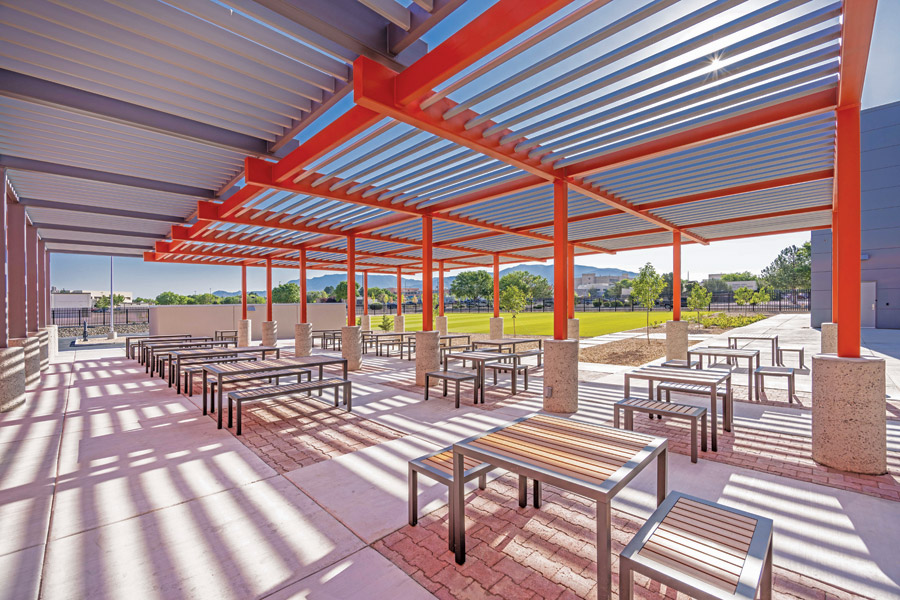
Photo by Matt Oberer
Understanding the complexities of security protocols, construction of the SCIF was scheduled near the project’s conclusion, allowing trade partners to work unimpeded by stringent security measures. This approach not only maintained productivity but also reduced owner costs by minimizing the need for onsite security personnel.
These and other innovations allowed the $47.5-million project to be completed at budget and on schedule.
The Defense Threat Reduction Agency’s Albuquerque administrative office boosts local employment, supports the base’s long-term viability and strengthens New Mexico’s reputation for military and defense-related activities. Notably, 51% of the project’s subcontractors were classified as small businesses, providing them with the opportunity to work on a large federal project and gain valuable experience.
The DTRA project also sets a new standard for design and construction at Kirtland Air Force Base, featuring a modern state-of-the-art LEED Silver design within a conventional budget. Additionally, the team controlled pollutants in stormwater runoff during and after construction, ensuring proper waste management and preventing chemicals from contaminating the water.