2025 Southwest Best Projects
Best Project, Energy/Industrial: Serrano Solar & BESS
Serrano Solar & BESS
Ariz.
BEST PROJECT
Submitted by McCarthy Building Cos.
Owner Longroad Energy
Engineering, Procurement & Construction Contractor McCarthy Building Cos.
Civil Engineer Wood Patel
Structural Engineer DLR Group
MEP Engineer McCalmont Corp.
Trailers, Plumbing & Sewer Design Hamilton Architecture
Civil Engineering Review Hilgart Wilson
Post and PV Array Design Wind Turbine and Energy Corp.
Tracking System Nextracker
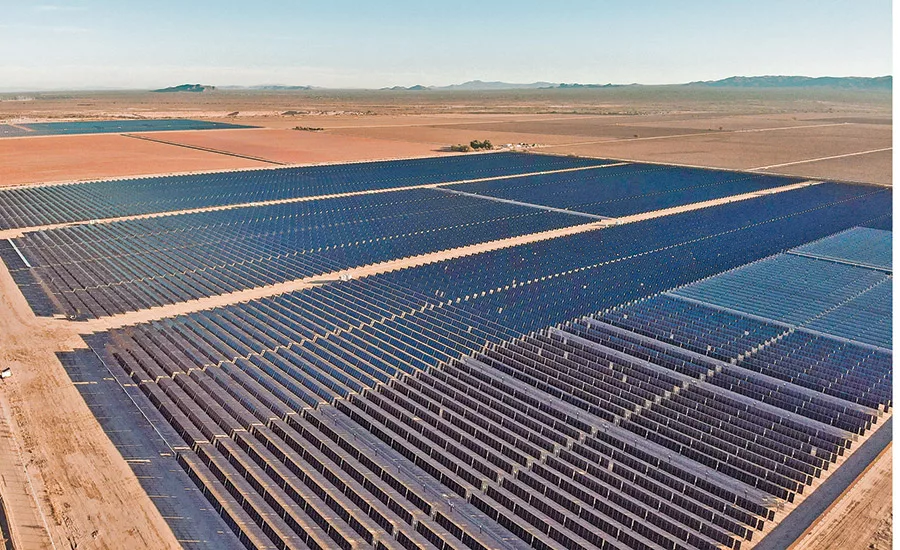
Spanning more than 770 acres of former farmland, the facility’s 415,000 high-efficiency photovoltaic panels generate 170 megawatts of electricity, enough to power more than 61,000 homes. Coupled with an 860-MW-hour battery energy storage system, the facility is among the largest of its type in Arizona. The complex is expected to eliminate more than 330,000 metric tons of carbon dioxide emissions annually—the equivalent of removing 75,000 gas-powered cars from the road.
Though ideal for constructing solar modules and other equipment, the site presented multiple challenges from its previous agricultural uses. Rapid weed growth often formed tumbleweeds that posed a major threat of damage to the solar modules. As a mitigation measure, nicknamed Lawn and Order, the team proactively incorporated regular vegetation control and weed spraying into the budget. At the end of the project, the team provided the owner with a mobile weed sprayer for long-term site management.
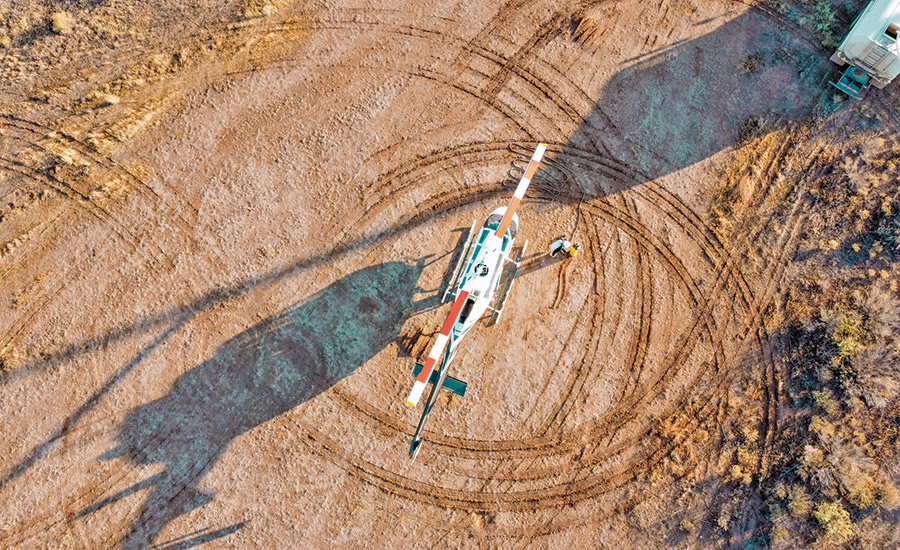
Photo courtesy McCarthy Building Cos.
Although the site provided favorable installation conditions for post-driving, it yielded significant challenges with unfavorable soil-shrinkage conditions. This required additional coordination with the civil design partners to maintain site requirements while redesigning the entire project site for more balanced soil conditions. Consultations with the area flood control authority helped determine appropriate pile and post depths so that all equipment was elevated above projected flood risks.
The project also served as a proving ground for innovation, introducing a cutting-edge, frameless module design that enabled faster, simpler installation and a tracking system that enables panels to rotate to a near-vertical angle during severe weather. Feedback from this project helped the manufacturers of the technologies to optimize future iterations, including improvements in shipping logistics for the new modules. The project team also piloted two wildfire sensor systems to provide early detection alerts of smoke or fires around the arrays and along the transmission line pathway to the substation connection point. This allows operations teams and first responders to more quickly address threats and mitigate risk.