2025 Texas & Southeast Best Projects
Best Water/Environment: Wastewater Treatment Plant Expansion and Indirect Reuse Program
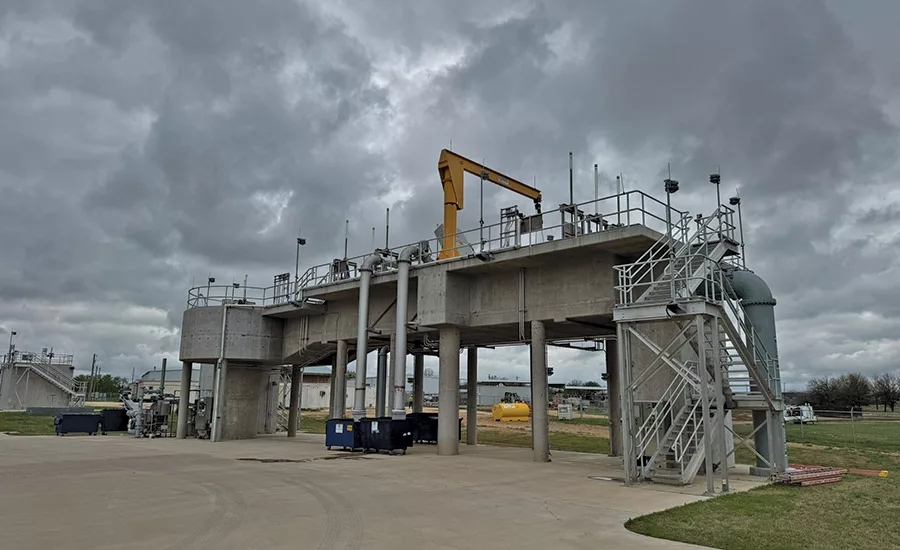
Wastewater Treatment Plant Expansion and Indirect Reuse Program
Cleburne, Texas
BEST PROJECT
Submitted by Freese and Nichols
Owner City of Cleburne
Lead Design Firm & Structural MEP Engineer Freese and Nichols
General Contractor Archer Western
Civil Engineer Childress Engineers
To prepare for an anticipated 25% population increase in the Cleburne area over the next decade, this project expanded both the city’s potable water supply and wastewater treatment capacity. The project provides a dual solution by expanding the wastewater treatment plant and launching the city’s first indirect potable reuse system, which is part of Cleburne’s One Water approach to integrate wastewater reuse into the raw water supply to achieve long-term sustainability. Scope of work included a 4-million-gallon-per-day advanced treatment facility, called the North Plant. It complements the existing 6.5 mgd South Plant, boosting the city’s total treatment capacity to 10.5 mgd. The North Plant features biological nutrient removal, UV disinfection and tertiary filtration, producing effluent suitable for direct discharge to Lake Pat Cleburne or for customer reuse while preserving existing infrastructure.
Meanwhile, a new four-mile IPR pipeline enables reclaimed water to be delivered directly to the reservoir, supplementing the city’s potable water supply.
Thanks to early geotechnical evaluations, the design team decided to lift the finished floor elevations at the North Plant to avoid costly rock excavation, saving an estimated $750,000. And rerouting the IPR pipeline avoided sensitive wetlands and saved another $500,000.
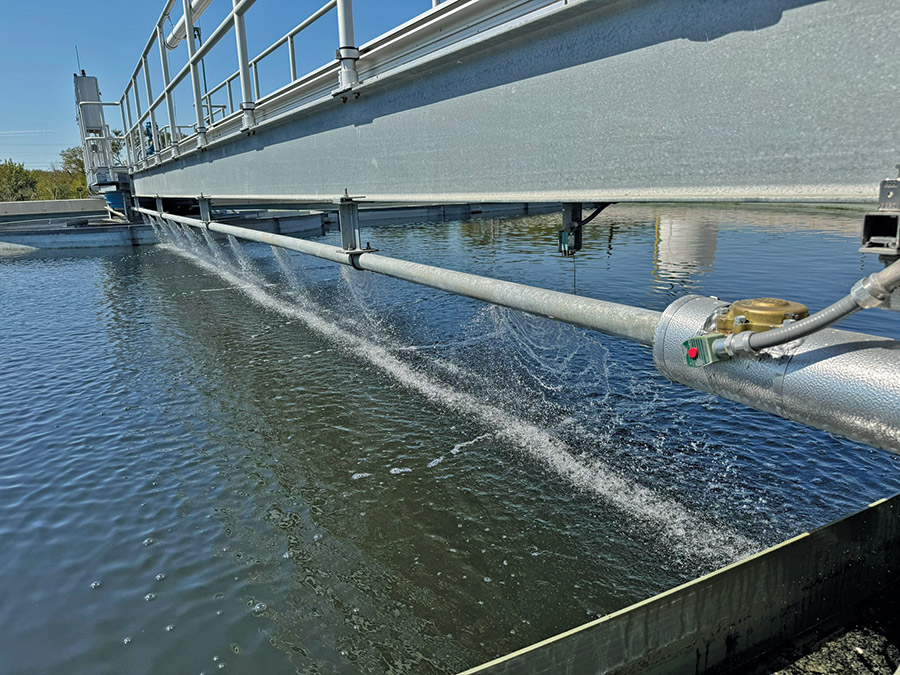
Photo by Freese and Nichols
From stringent environmental reviews to post-pandemic market volatility, the project faced multiple obstacles. By separating the treatment plant and pipeline contracts, the team avoided delays related to the National Environmental Policy Act reviews, allowing plant construction to proceed while the West Loop Reuse Pipeline underwent an environmental review.
Beyond increasing capacity and drought resilience, the project modernized solids handling, expanded dewatering infrastructure and upgraded automation across the treatment system.
The use of 3D design models and LiDAR scanning helped retrofit the aging dewatering building and influent pump station. These tools verified spatial fit, reduced change orders and optimized plant operations, increasing solids handling capacity by 170% without new construction.


