2025 Texas & Southeast Best Projects
Best Office/Retail/Mixed Use: Pullman Market

Pullman Market
San Antonio
BEST PROJECT
Submitted by Joeris General Contractors
Owner Pearl Market LLC
Lead Design Firm Clayton Korte LLC
General Contractor Joeris General Contractors
MEP Engineer Glumac
Architect Baldridge Architects
Originally built in 1948, this 55,000-sq-ft historic Art Deco warehouse has been revitalized as a vibrant marketplace that celebrates local flavors and the area’s architectural heritage. The project’s centerpiece is a bustling open market filled with high-end restaurant counters and a central oval bar.
Many of the building’s original features were preserved and enhanced. Meticulous attention was paid to replicating the original doorways, matching canopies and windows, and salvaging bricks for facade repair, all while incorporating new utilities and high-end MEP systems.
Facing long lead times on switchgear and essential MEP components, the contractor worked closely with trade partners to repurpose available gear from another project, avoiding months of delays. The building’s historical status introduced preservation challenges, especially with the street-facing facade. The team replicated the original main doors, reused salvaged bricks and coordinated closely with the Historic and Design Review Commission.
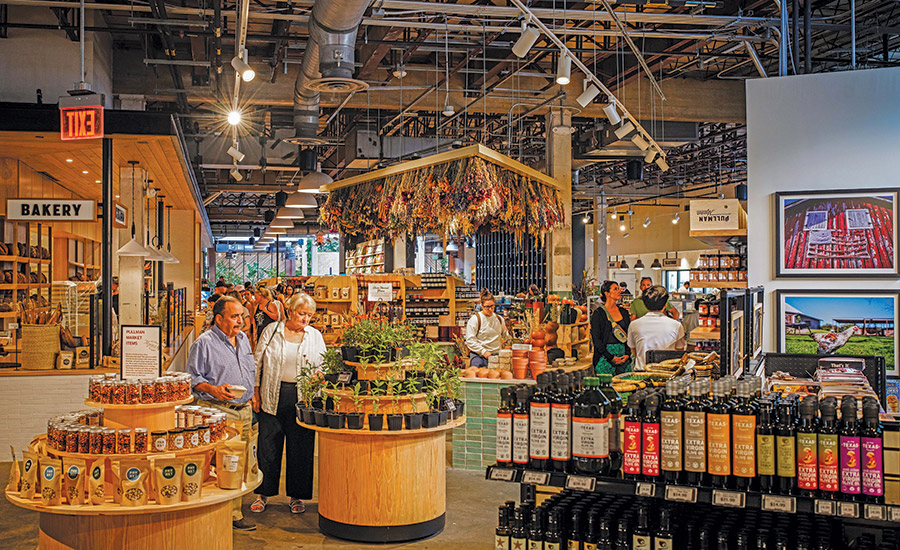
Photo courtesy photographer Robert Lerma
Due to the interconnected nature of the suites and the openness of the market design, phasing certificate of occupancy approval required detailed planning. The contractor collaborated with the city to break permits into manageable packages, streamlining inspections and approvals while keeping the project on track. And by proactively adjusting underground utilities and slab penetrations to avoid rework, the project team was able to keep the project within budget.
Other complexities emerged during demolition, where undocumented structural modifications and historical layers weren’t captured in the original plans. The team used laser scanning and BIM modeling to verify conditions and ensure alignment between the existing structure and new design intent. The models were used to catch conflicts early, enhance alignment between trades and avoid costly field corrections.
The team also employed pull planning to hit a critical milestone for tax credit eligibility. By reverse-engineering the schedule and focusing resources on key scopes, the contractor ensured the building met a 2023 temporary certificate of occupancy deadline.