2025 Texas & Southeast Best Projects
Best Manufacturing: Samsung T-Project
Samsung T-Project
Taylor, Texas
BEST PROJECT
Submitted by Primoris Services Corp.
Owner SEA Construction LLC
Lead Design Firm Jacobs Solutions
Construction Lead Primoris Services Corp.
General Contractor Samoo Architects & Engineers
Civil Engineer Texas Shafts Inc.
Structural Engineer DIS-TRAN Steel LLC
Mep Engineer Jacobs Solutions
A chip fabrication facility northeast of Austin will produce logic chips for next-generation devices in areas such as 5G, AI and high-performance computing.
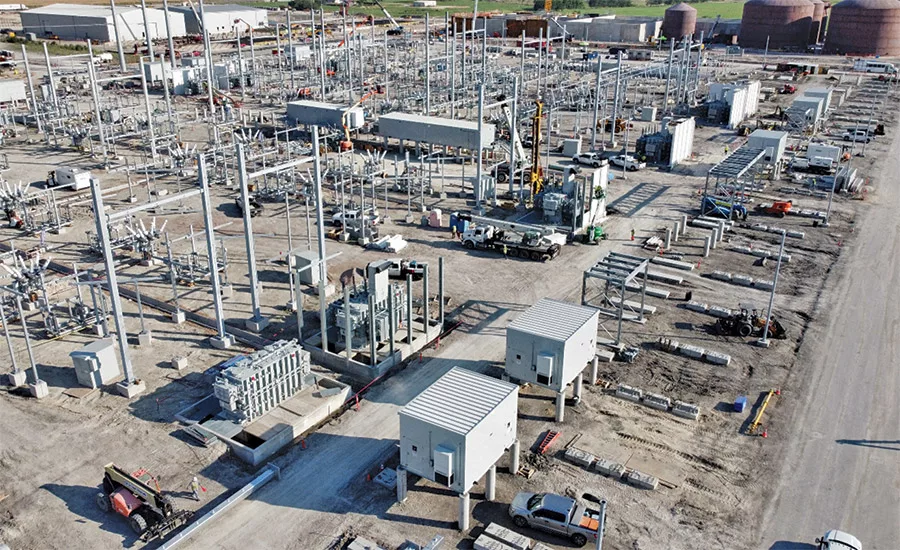
Scope of work included construction of a 138-kV substation to provide reliable, high-capacity power to the facility. The substation was configured as four interconnected units delivered in two phases. This will serve as the electrical backbone of Samsung’s facility, ensuring power to support energy requirements.
Integrating four substations within a single complex required a modular design and construction strategy enabling parallel workstreams and phased start-up, which reduced the schedule.
One key feature is the cable tray system between the electrical houses that facilitates complex cable routing for system reliability.

Photo by Samsung T Project
Coordinating equipment delivery timelines amid evolving site conditions and client-driven design changes was vital, as each element could potentially delay critical path activities. The team implemented a rolling coordination schedule enabling flexible resequencing of work as conditions shifted. Weekly alignment meetings brought together engineering, procurement and field operations teams, fostering real-time communication and rapid decision-making.
When the team came across unexpected subsurface conditions, the foundation had to be promptly redesigned to account for the changes. Meanwhile, strategic use of prefabricated components and just-in-time delivery methods helped maintain progress despite unforeseen issues.
To maintain the project schedule, the team launched an acceleration plan that saw crews working seven days a week between June and August 2023, increasing weekly hours by 6,000. A comprehensive fatigue management plan proactively safeguarded the workforce while maintaining performance under these scheduling demands.
The project team also implemented advanced material tracking and sustainability practices uncommon for traditional substation builds. Surplus materials were repurposed for another project to minimize waste.