Transportation
MTA Inspector General Flags $2M in Unaccounted Track Material at Large NYC Rail Resilience Project
NYC Transit has adopted recommendations made in the IG's report
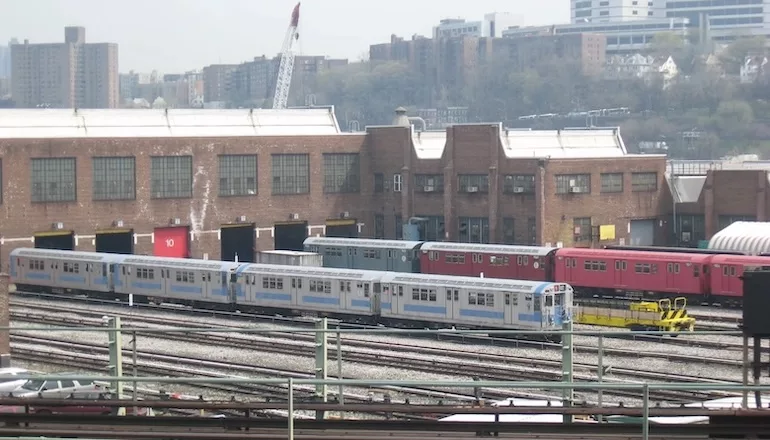
More than $2 million in track and third rail materials were not properly accounted for at a recently completed project at the 207th Street Yard in New York City.
Photos courtesy of the Office of the MTA Inspector General Report
New York City Transit failed—for two years—to receive and properly account for more than $2 million in surplus track and third rail materials from a recently completed rail reconstruction project adjacent to the Harlem River in Manhattan, according to a final audit released by the Metropolitan Transportation Authority Inspector General.
The Aug. 7 report found that the transit agency failed to take possession of material from the 207th Street Yard flood mitigation and resilience project after they had been purchased by its contractor the Walsh Group. Prior to the IG's initial 2023 report on the project, the agency lacked procedures to track material purchased from contractors and controls over how these supplies should be documented once accepted, the audit said.
NYC Transit and MTA's Construction & Development unit in 2020 inherited the reconstruction project stemming from Hurricane Sandy flood damage in 2012. But after costly change orders were executed, the agencies failed to resolve the issue until the IG launched its investigation, the report stated. The IG said they have since implemented its recommendations, including completing a reconciliation of materials, implementing inventory tracking for contractor-purchased items and adopting surplus materials procedures.
“The MTA must ensure the best systems are in place for tracking its construction material in order to avoid unnecessary spending,” MTA Inspector General Daniel Cort said in a statement. “I am pleased that the [agency] has accepted our recommendations and addressed our proposed changes.”
The project's final cost was $801 million, said NYC Transit.
Eric Lenkowitz, deputy inspector general for communications and public affairs, would not say if the lack of procedures for tracking materials was isolated to the 207th Street Rail Yard project or a systemic problem across the agency. “We can only speak to the situation covered by this report,” he said.
The IG's office said it will continue to monitor how transit agencies implement inventory management improvements.
“We appreciate the IG’s focus on accountability and transparency. In this project from over six years ago to fully rebuild and protect 207th Street Yard from flooding after Sandy, process issues led to a contractor ordering materials that were not needed,” Kayla Shults, an MTA spokesperson said in a statement. “We’ve ensured the materials were returned and fully accounted for. Reforms at the new MTA have addressed any vulnerabilities this report helpfully revealed.”
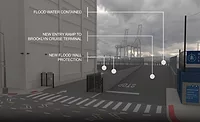
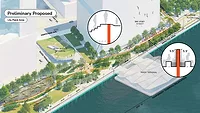
The Walsh Group did not respond to ENR’s request for comment, but in February listed the project, which includes a 1,535-linear-ft marine floodwall engineered to endure flooding from a 500-year storm, as completed on its website. Situated on the Harlem River, the wall consists of 279 interconnected 54-in.-dia steel pipe piles.
“The completion of this project represents a significant step forward in protecting New York City Transit’s infrastructure from extreme weather events while ensuring the continued efficiency and safety of rail operations at the 207th Street Rail Yard,” the Chicago-based contractor wrote on its website.
Discrepancies
The IG said NYC Transit and MTA Construction & Development disagree with the firm's valuation of the outstanding cost of the material. The agencies claimed that they were either later used on the same project, delivered after the report’s initial publication or offset through financial credits.
But it said that mishandling these materials resulted in significant change orders to the emergency repair contract, which included overall repairs of bus depots, train yards, signal systems and fan plants.
After winning the contract in 2018 for an initial $383.6 million, the Walsh Group purchased much of the long-lead-time material for the project before conducting its own site survey, finding that some of the work had already been completed in-house by NYC Transit, including 82% of the 17,875 ft of the planned track replacement. NYC Transit in July 2020 estimated that the contract should be reduced by about $18.2 million in direct costs for equipment, labor and materials that were no longer needed.
During its survey, Walsh also discovered that other damaged infrastructure, including more than 5,000 ft of track valued at $11.5 million in direct costs, should have been included in the awarded contract scope.
“NYC Transit was therefore obligated to purchase this surplus material from the contractor, and also had to add back material for the missed and added track work,” the report said.
While the contract’s cost was ultimately reduced by $6.7 million, the negotiated credits depended on NYC Transit taking ownership of surplus materials the contractor had already purchased.
Another change order involved a similar combination of deleted and additional work on the third rail, according to the report, which also said the justification given to managers to approve the two change orders "misrepresented the reasons change was needed and that records prepared by the project construction manager to request [their] approval incorrectly portrayed the root causes for changes.”
TYLin Group, which lists itself as the project construction manager, did not respond to ENR before story posting.
While the report said an unnamed other firm's work was incorporated into NYC Transit’s in-house design for track work as one construction contractor bid package, Lenkowitz said “the design work resulting in the deletions and additions of track work in the contract was performed in-house by NYC Transit.”