Transportation
NYC Congestion Pricing to Continue as Judge Stays Federal Effort to Withhold Funding
Temporary injunction keeps tolls for vehicles entering lower Manhattan in place until October
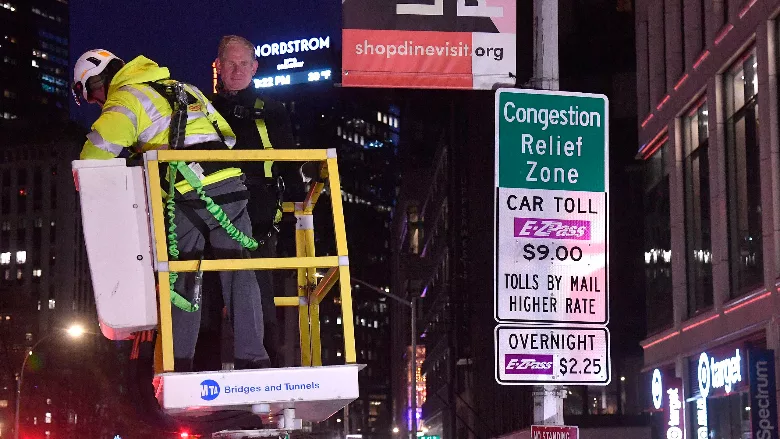
A federal district judge in Manhattan says New York City’s congestion pricing program can stay in place until the matter goes to trial in October.
Judge Lewis J. Liman issued a temporary injunction against the Trump administration’s efforts to end New York City’s congestion pricing program just before Transportation Secretary Sean Duffy’s stated deadline to start withholding federal approvals and funding for several New York highway and transit projects.
Liman’s initial order on May 27 kept the first-of-its-kind program—aimed at reducing traffic congestion while also funding billions of dollars worth of subway, bus and other transportation projects—in place until June 9.
The next day, he extended the order to the fall.
The toll program, which took effect Jan. 5, charges most passenger cars driving into lower Manhattan a $9 fee during peak hours. Liman’s order pumps the brakes on the U.S. Dept. of Transportation’s Feb. 19 decision to rescind its earlier approval for funding for the Metropolitan Transportation Authority’s congestion pricing program. MTA immediately responded to the federal decision with a lawsuit alleging that the federal effort to terminate the program was “unlawful.”
The agency is now asking Liman to permanently declare the termination null and void.
In issuing the temporary restraining order, Liman said stopping the program now would cause New York State “irreparable harm,” according to media reports, and he is considering a “longer-term protective order,” noting that the program that has undergone years of state, federal and local approvals has shown a “a likelihood of success.”
Liman pointed to data that the program has reduced traffic since it was implemented in January and that MTA is on track to fund $15 billion of assorted transit projects, including Phase 2 of the $7.7-billion Second Avenue subway extension.
Despite an agreement last month between federal DOT and New York officials to keep the program in place at least until mid-summer, Duffy later set a May 28 deadline for New York to cancel congestion pricing or lose some federal funding.
The secretary has argued that the program unfairly charges drivers, and mass transit projects should not be primarily funded by tolls. In a March 20 social media post, Duffy said New York’s “unlawful pricing scheme charges working-class citizens to use roads their federal tax dollars already paid to build. We will provide New York with a 30-day extension as discussions continue. Know that the billions of dollars the federal government sends to New York are not a blank check. Continued noncompliance will not be taken lightly.”
Carlo A. Scissura, president and CEO of the New York Building Congress, said he’s “not surprised” by the judge’s ruling and is in fact “thrilled” by it.
"New Yorkers have seen the many benefits of this game-changing policy firsthand in just a few months,” Scissura said in a statement released after the ruling, “and we look forward to the end of these lawsuits and a brighter future with congestion pricing funds enabling MTA construction projects and getting shovels in the ground.”
Congestion Pricing Now Coalition, a advocacy group for congestion pricing, said in a statement that the program is working.
"Traffic is down, business is up, commutes are faster and New Yorkers are breathing easier," the group said in its statement. "The data clearly shows that congestion relief works and that the [Trump] Administration’s continuing efforts to end this successful program are a misuse of time, resources, and taxpayer dollars. Transit is the lifeblood of our region’s economy and every day that the cameras stay on moves us forward—toward a healthy, affordable and more equitable future."
This story was updated with new information on July 3