ENR 2025 Top 25 Newsmakers
Allison L.C. de Cerreño: Key Leader During New York City's Effort to Enact the First U.S. Congestion Pricing Program
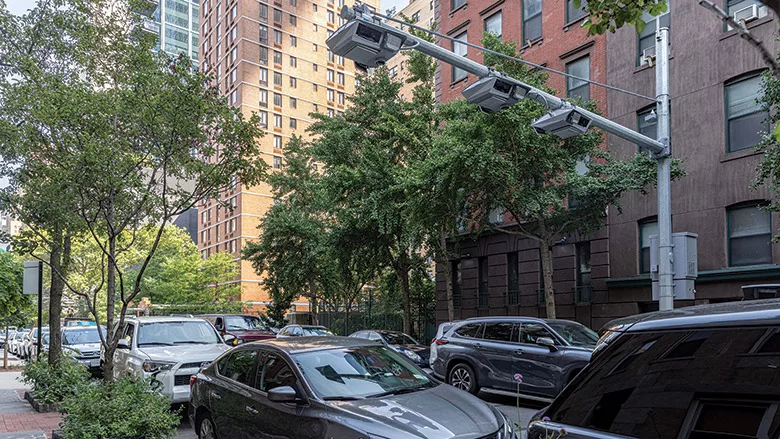
The New York City Congestion Relief Zone tolling program went into effect Jan. 5, 2025, impacting private vehicles entering Manhattan below 60th Street.

Related Article:
Best Specialty Construction: Central Business District Tolling Program
Back to:
25 Top Newsmakers
After many years of study and planning, the New York City Metropolitan Transportation Authority activated the nation’s first congestion pricing program on Jan. 5, 2025. Developed under a state-mandated effort to reduce traffic congestion and raise revenue to address years of under-investment in public transportation, the program requires most motorists entering Manhattan below 60th Street, an area known as the Congestion Relief Zone, to pay a fee determined by time of day, type of vehicle and other factors and monitored by a network of more than 110 detection points that are fitted with 1,400 cameras and E-ZPass readers.
Although many people across multiple agencies were involved with shaping and implementing the program, MTA Chief Operating Officer Allison L. C. de Cerreño played a key leadership role as the effort reached its critical final stages. She “led the analysis which has probably been more scrutinized by lawyers than any other transportation project,” says former New York City traffic commissioner Sam Schwartz, famed as “Gridlock Sam.” He adds that among multiple lawsuits that have sought to end the program, “none have showed any significant flaws in the analysis.”
An extensive outreach effort, launched before publication of the program’s environmental assessment, proved critical to gaining public buy-in, C. de Cerreño says, particularly when it came to crafting a tolling structure that would achieve the legislation’s congestion reduction and revenue goals. Conducted in nine different languages and reaching across nearly 30 counties, the outreach offered numerous channels for the public to weigh in, including several marathon hearings lasting more than seven hours.
“Although some people were adamantly against the [Congestion Relief Zone ], they recognized and appreciated that we were listening to them,” she recalls, adding that close collaboration with different agencies and stakeholder groups “went a long way because they also spoke to their constituents. Trust-building was a huge piece of our effort.” MTA’s proactive public engagement continued after the program went live, including attention to potential systems problems and timely responses to E-ZPass customer account issues.
“We gave customers, especially for something new and different, a level of trust and confidence that we were watching over it,” C. de Cerreño says. “If they didn’t see a result right away, they knew it was going to happen.”
While the program still faces legal challenges and the threat of suspension by the Trump administration, MTA says it is fulfilling its goals. The agency reports that through the first ten months of 2025, more than 21 million fewer vehicles entered Manhattan’s central business district, helping increase internal travel times by 4.6%, and improve morning rush hour vehicle speeds on crossings into the city by 23%. The tolling structure is also on track to generate more than $500 million in its first year. MTA also reports positive results in noise and crash reduction, and improved air quality.
“It was an amazing and somewhat humbling experience to lead a team of really talented and dedicated people from multiple entities, including some that don’t always work together,” C. de Cerreño says, adding that the approach toward tackling such a challenging and contentious transportation issue has paid off.
The congestion pricing program, she notes, “is doing what we anticipated it would do.”


