Pittsburgh Readies to Dig Into $1B Sewer Overflow Tunnel Project
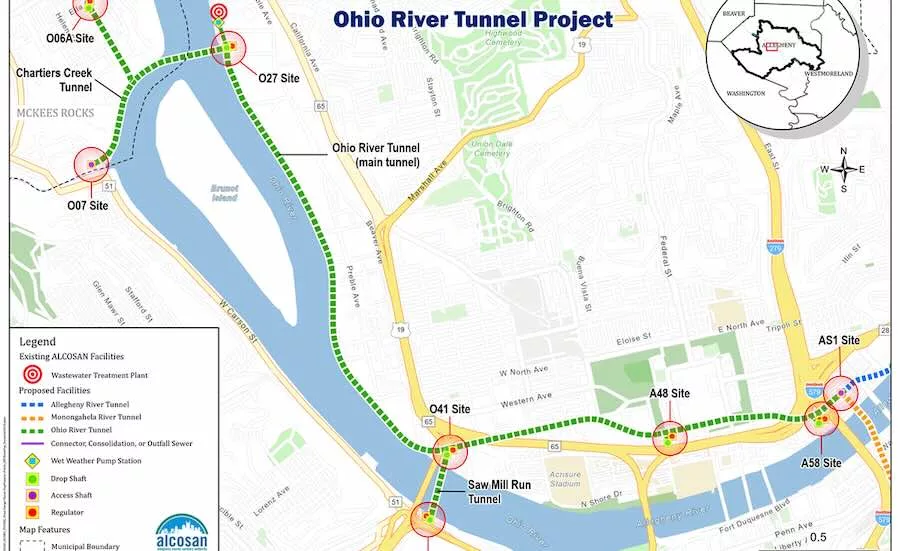
Scheduled to get underway later this year, Lane/Brayman’s five-year, $1-billion contract for the Ohio River Tunnel project in Pittsburgh calls for constructing nearly 5 miles of deep tunnels that will channel flows to a new wet-weather pump station at ALCOSAN’s North Side wastewater treatment plant.
A joint venture of Lane Construction Corp. and Brayman Construction Corp. has been selected for the Ohio River Tunnel project in Pittsburgh, the first major component of the Allegheny County Sanitary Authority’s long-term program to reduce sewer overflows and protect the region’s waterways.
Scheduled to get underway later this year, Lane/Brayman’s five-year, $1-billion contract calls for constructing nearly 5 miles of deep tunnels that will channel flows to a new wet-weather pump station at ALCOSAN’s North Side wastewater treatment plant. The project team will use a tunnel boring machine to excavate the main 18-ft-dia. tunnel approximately 118 ft to 150 ft deep on a 3.8-mile route along the Ohio River. The underground network will also include two 14-ft-dia. secondary tunnels measuring approximately 4,500 and 500 ft in length, and a 600-ft-long, 8-ft-dia. dewatering tunnel at the treatment plant.
The project also includes construction of eight 25- to 70-ft-dia. deep shafts, ten flow regulator structures, two technical buildings and a new river outfall.
Lane, the U.S. subsidiary of Webuild Group, will provide project management and major tunneling operations, while Pittsburgh-based Brayman will oversee key heavy civil and shaft construction activities.
Once complete, ALCOSAN says the system will capture and convey excess wet weather flows, reducing combined sewer overflows into regional waterways by approximately 7 billion gallons annually. The agency will be responsible for operating and maintaining the system, which is designed to last for at least 100 years.
Two additional deep tunnels are planned under ALCOSAN’s multi-billion-dollar regional tunnel program. Tentatively scheduled for full build-out over the next 15 years, the planned network will total 16 miles of wet weather tunnel, 40 regulators, and more than 30 shafts, as well as approximately four miles of consolidation sewer.