Water
US Commission Asks Mexico to Prioritize Pipes Leaking Raw Sewage in Tijuana River Valley
Mexico repairs ruptured pipes in quick turnaround for ongoing wastewater management effort
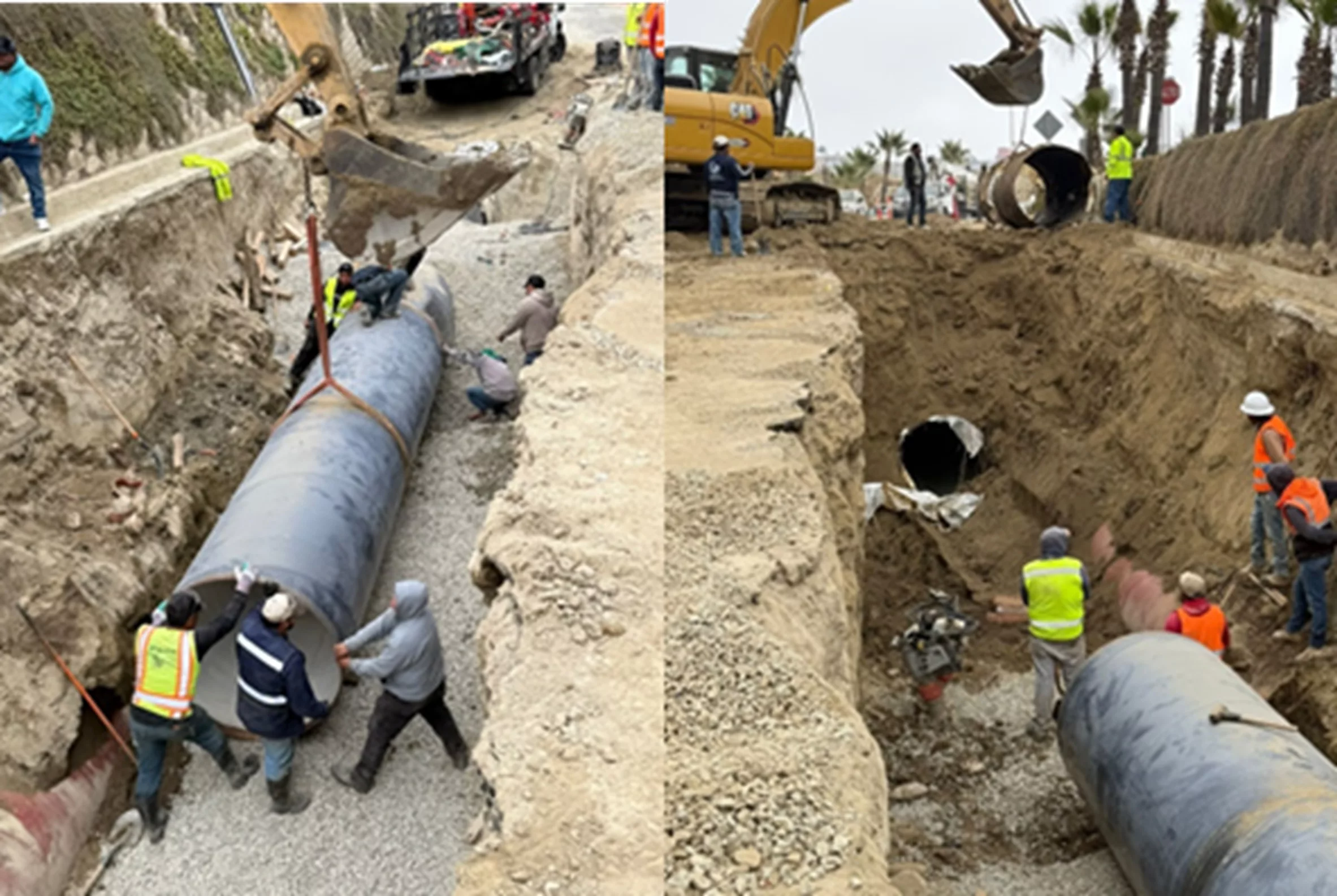
Crews working for the Mexican side of the International Boundary and Water Commission remove a section of ruptured pipe in the Tijuana River Valley May 30.
The U.S. Section of the International Boundary and Water Commission, an agency created by treaty to deal with water issues between this country and Mexico, reported May 30 that two ruptures occurred within two weeks of each other to a system of pipes known as the parallel gravity line that conveys wastewater to the San Antonio de los Buenos wastewater treatment plant near Tijuana, Mexico. The agency's Mexican section reported June 4 that emergency repairs to the ruptured pipes were completed, a significantly faster turnaround than for previous ruptures over the past two decades that have caused pipeline failures.
Mexican authorities are working on a new international collector system to replace much aging infrastructure on that country's side of the border, but discharges into the Tijuana River continue to occur even as research has shown negative health impacts to residents on both sides of the border.
The exact reason for the most recent collapse is unknown, the U.S. commission section said, but the Mexican counterpart shut down several pumps along the border so crews could finish repairs. U.S. officials are monitoring flows of raw sewage, trash and sediment in collectors in the canyons on the American side of the border and said residents may still experience strong odors from off-gassing of sulfur dioxide and other chemicals. The collectors intercept and divert dry-weather transboundary flows and raw sewage originating from Mexico to the South Bay International Wastewater Treatment Plant near San Diego.
US Commissioner Chad McIntosh contacted Mexican Commissioner Adriana Reséndez on May 31 to request a 24/7 repair effort and demanded Mexico do everything possible to keep wastewater out of the Tijuana River. Reséndez reported the repair completion. Following restart of Mexico’s sanitation system pumps, flows in the Tijuana River and canyon collector system have significantly decreased, the U.S section of the commission said.
Editor's note: The text of this article was updated 6/5/26 to include repair announcements by the Mexican section of the International Boundary and Water Commission.