Sports/Entertainment
Project Teams Race to Finish 2026 World Cup Venues
Toronto’s BMO Field is undergoing one of the largest renovations of all 16 venues ahead of this summer's global soccer tournament
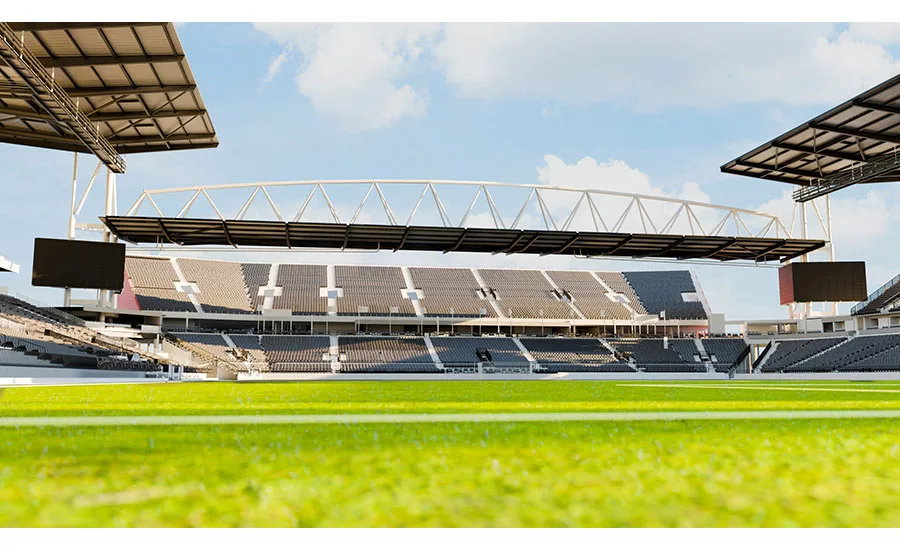
Toronto’s BMO Field is undergoing one of the largest renovations of all 16 FIFA World Cup renovations ahead of the tournament starting in June. The stadium’s seating capacity is being increased to 44,000 seats.
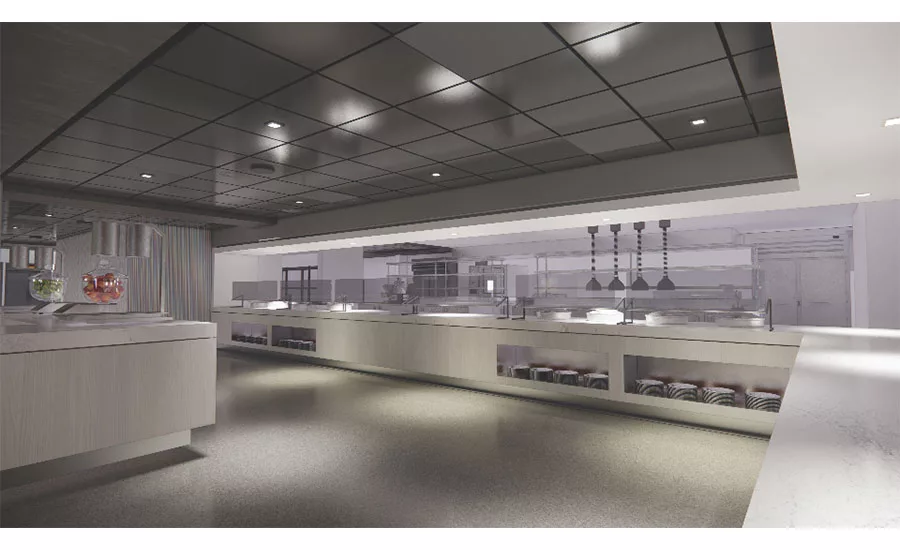
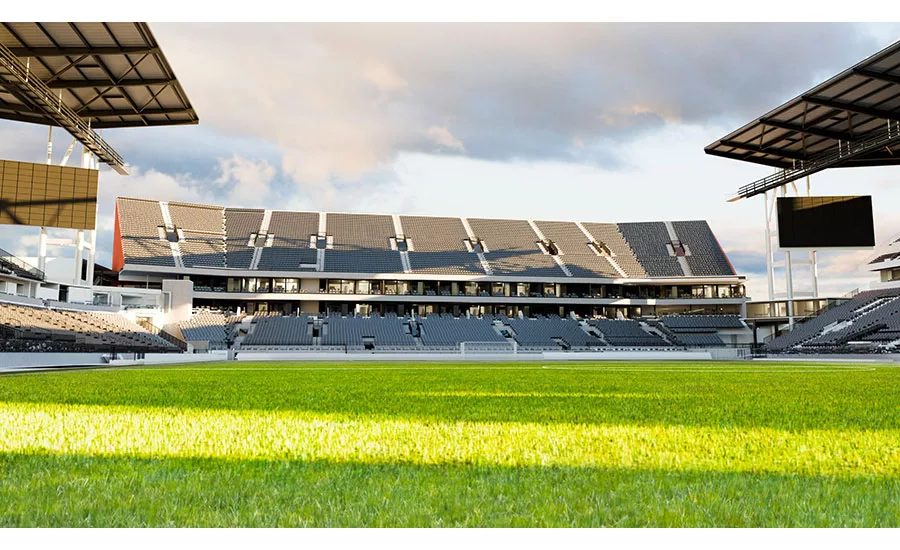
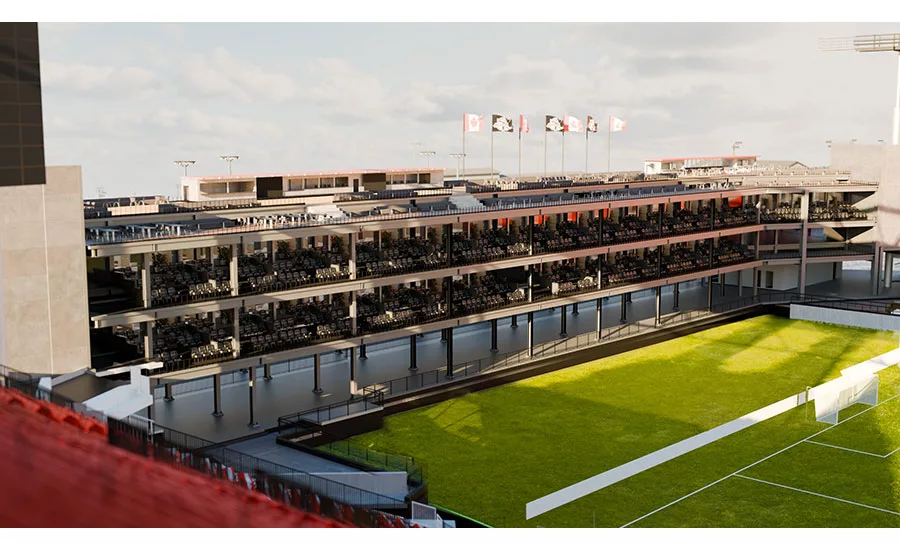
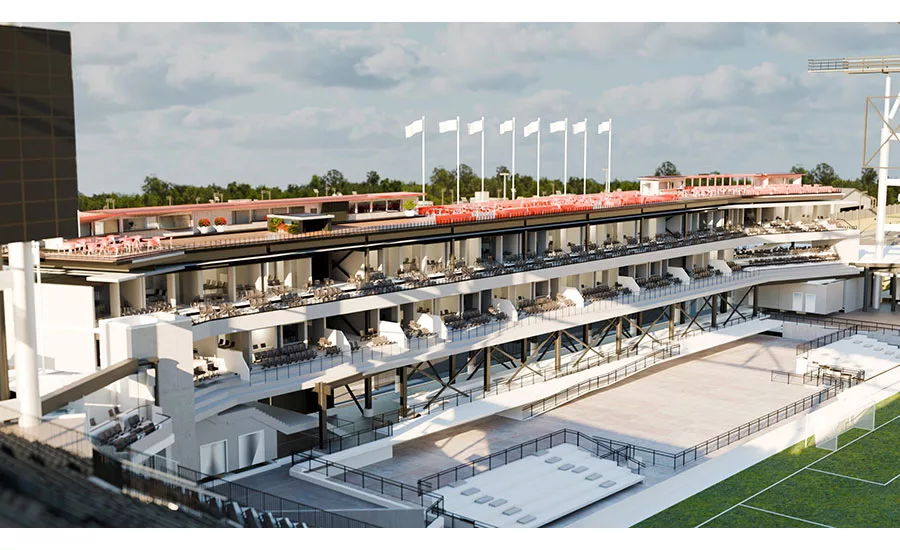
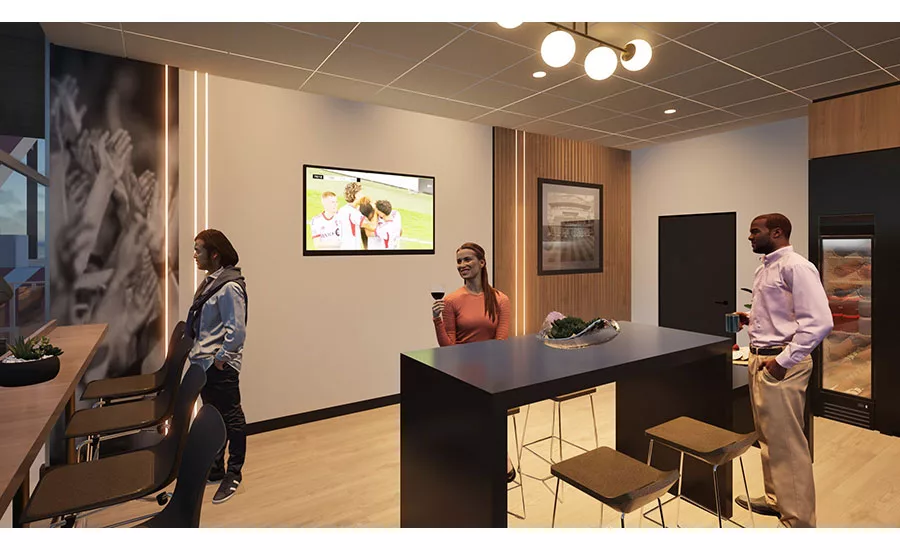
A little less than four months from kicking off World Cup 2026, soccer stadiums across North America are preparing for the tournament’s largest-ever draw—48 national federation teams playing 104 matches in 16 different venues across the U.S., Mexico and Canada. But while not a single new constructed stadium is on the docket—a World Cup rarity—renovations are underway at all 16 venues ahead of the tournament’s June 11 start.
Each stadium is accustomed to hosting either National Football League or global-level football and mostly require minor tweaks, field-sized adjustments and hospitality and VIP area upgrades ahead of the World Cup.
“It is team support spaces, hospitality, some of the security structure overlay and some infrastructure changes as not all NFL fields are ready to host FIFA,” says Ryan Sickman, global sports leader for design firm Gensler, which has completed work on six of the World Cup venues. “You are going to see both sides blow out to the north and south just to reach the capacity we are trying to get to.”
Toronto’s BMO Field, however, required heavy lifting to host the world’s most popular sporting event. Built to hold just under 28,000 fans when it won an ENR Global Best Projects award in 2017, the eastern-most venue of the two Canadian hosts is undergoing a reported $146-million renovation to expand to more than 44,000 capacity.
“That is a massive infrastructure upgrade,” says Sickman, whose firm is project architect.
Substantial completion is set for end of March on the multi-phased project being built by a general contracting partnership between PCL and Arena Group.
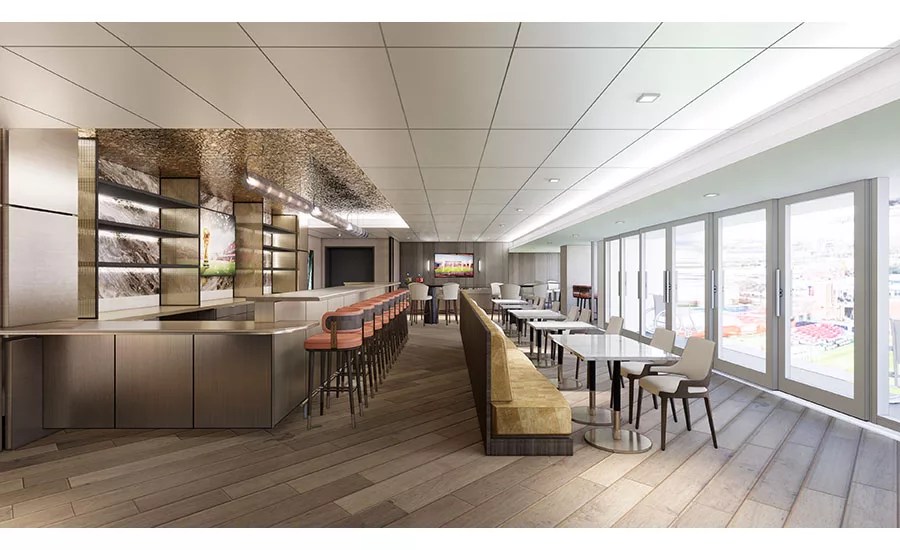
The project has both temporary and semi-permanent elements. Sickman says the added seating is temporary, “the likes you saw in Russia,” with temporary seating pushing outside the typical stadium design. But there’s also a semi-permanent overlay that adds additional hospitality for the World Cup that stadium owners Maple Leaf Sports & Entertainment can choose to keep indefinitely.
BMO Field, which regularly hosts MLS and CFL teams, required the project to work around the stadium’s schedule. “It couldn’t afford to not be utilized,” Sickman says. “The multi-year phasing schedule was impressive, what occurred in that time frame.”
Nearly doubling the seats also meant handling a completely new approach for ingress and egress, restrooms, accessible seating, electrical loads and plumbing loads. The project features the semi-permanent hospitality largely using concrete at ground level, sometimes in multiple levels, with platforms and steel scaffolding holding the temporary seating above and beyond.
Getting the stadium to work in the World Cup configuration requires a mixture of building into open space and reworking what was already there. Sickman says they altered stairwells and elevators, moved and worked around infrastructure and created a fresh approach to the stadium, resulting in a new look for World Cup and for when the temporary seats get dismantled. “What we are trying to do is look at this through the lens of legacy mode, put into place from a permanency perspective as much as the client is looking for,” he says, “and overlay on top of that.”
World Cup 2026’s North American Arrival Requires Stadium Projects
With the 2026 World Cup less than four months away, here’s a region-by-region breakdown of upgrades being made to each of the 16 venues:
by Tim Newcomb
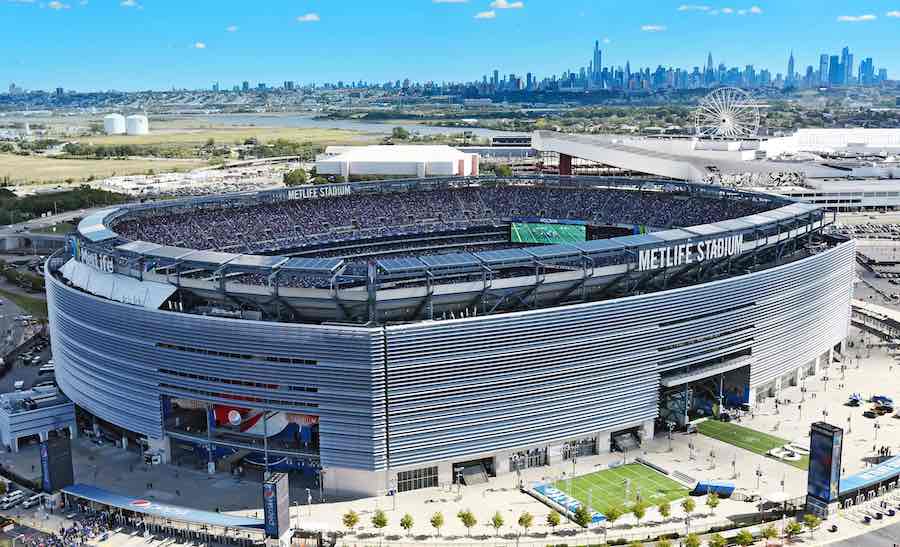
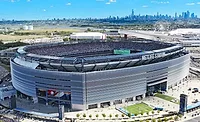
MetLife Stadium in northern New Jersey, which will host the 2026 World Cup final on July 19 rolled through two phases of renovations to prepare for the tournament.
Photo courtesy Skanska
Western Region
The tournament’s Western Region features BC Place in Vancouver, B.C., Lumen Field in Seattle, Levi’s Stadium in Santa Clara, Calif., and SoFi Stadium in Inglewood outside of Los Angeles.
In Vancouver, along with the need to install a FIFA-required grass field at BC Place, the Crown agency B.C. Pavilion Corp. that operates the stadium says upgrades focus on the fan experience, including a videoboard, merchandise store, restrooms and elevator capacity.
Seattle’s Luman Field required field improvements to install the grass pitch and additional infrastructure to support that temporary grass field, according to a stadium spokesperson. The $19.4-million project also includes safety and security enhancements, including additional lighting, cameras, turnstiles and bollards and the construction of new staging areas. The biggest structural change to the stadium outside of the playing field is “seat standardization” to upgrade bleacher-style seating in the venue’s Hawk’s Nest to include seat backs.
Levi’s Stadium recently wrapped up a $200-million renovation, part of the stadium’s effort to upgrade before the 2026 Super Bowl. The changes, designed by Populous, delivered new video boards and sound systems, including the largest outdoor 4K video boards in the NFL that come 40% larger than the previous boards, says Populous. Suits, lounges and club areas were also upgraded as the stadium underwent 15 projects during the last three years. Also included was an interior facelift that updated all furniture, fixtures and equipment and interior finishes through high traffic zones as well as new sponsorship signage.
The 2020-opened SoFi Stadium required widening the pitch to accommodate the 74-yard width needed for FIFA. To make it happen, the stadium cleared corner seats at field level and replaced them with retractable seating. SoFi also needs to install a temporary grass field.
Central Region
The Central Region features AT&T Stadium outside of Dallas, Mexico City’s Estadio Banorte (previously Estadio Azteca), Estadio Akron in Guadalajara, Estadio BBVA in Monterrey, Arrowhead Stadium in Kansas City, Mo., and NRG Stadium in Houston.
AT&T Stadium had announced a $350-million upgrade ahead of the World Cup that includes upgrading the world’s largest center-hung HDTV video board, refreshing pro shops, adding concession and bar options and additional hospitality updates. The stadium will add a temporary grass field and requires widening the pitch to accommodate soccer, necessitating reworking the field height and making changes to the lower bowl configuration at the field level.
Arrowhead Stadium updated its field and lower-bowl seating. The NFL’s Chiefs said 5,100 cu yards of earth and rock were removed and roughly nine million pounds of concrete was taken out. Due to the shape of the lower bowl, approximately 3,500 seats were removed to make way for the updated field. The seats were then replaced one-for-one in a modified configuration that features a modular riser system that can work for either NFL or FIFA events. The field project included a new aeration and moisture-control system.
NRG Stadium is installing a natural grass field, which requires the removal of lower-bowl corner seating. The stadium also upgraded LED lighting.
In Guadalajara, a new natural grass pitch, updated video boards and fresh lighting highlight the 2010-opened stadium’s upgrades. Estadio Akron says in a statement that the visual experience will step to a new level with the highest-definition LED technology available and a fresh audio system. The venue will also have a pair of temporary hospitality areas.
When Estadio Banorte hosts World Cup matches it will become the first stadium to host matches at three different World Cup events. Changes are coming in Mexico City, even if local reports now call the project behind schedule and with some of the changes in danger of not getting completed in time. Key projects include a new metal and glass ring on the interior roof meant to shield fans from the elements. The exterior will feature new LED lighting. Other renovations feature a new grass field and interior changes to relocate locker rooms, update seats and recreate hospitality spaces in a reported $80-million project that closed the venue.
Opened in 2015, Estadio BBVA in Monterrey required minor refreshing ahead of the World Cup, including a new natural grass surface
Eastern Region
The Eastern Region features BMO Field in Toronto, MetLife Stadium in New Jersey, Gillette Stadium outside Boston, Lincoln Financial Field in Philadelphia, Mercedes-Benz Stadium in Atlanta and Hard Rock Stadium in Miami.
MetLife Stadium will host the World Cup final, requiring the stadium to ready its playing surface by removing the four corners of existing precast seating and replace them with a new modular steel composite seating system with the related mechanical, electrical, audio visual and plumbing adjustments. The project will feature the removal of 1,740 permeant seats to expand the field’s dimensions, moving those seats to a modular system to maintain current NFL seating quantities and layouts.
The stadium also introduced four new cornerstone video boards, a new audio system and fresh DAS system. “We believe these enhancements will provide an engaging event-day atmosphere for our guests,” says Ron VanDeVeen, MetLife Stadium president and CEO.
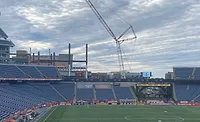
A relatively recent 2023 upgrade at the Boston-area Gillette Stadium included a north end zone upgrade, along with a new video board. For the World Cup, the stadium is getting a temporary natural grass field.
Lincoln Financial Field in Philadelphia removed the corners of the lower bowl seating to fit the FIFA pitch. That pitch comes new for the tournament and other upgrades include security enhancements.
A temporary natural grass field will get overlayed on the artificial turf at Atlanta’s Mercedes-Benz Stadium. The venue also plans updates to the sound system, lighting, hospitality spaces and Wi-Fi infrastructure.
Miami’s Hard Rock Stadium already underwent a massive 2016 renovation at the time designed to allow the venue to regularly host Super Bowls, NCAA football championships and the World Cup.