Environment
Blue Origin’s Cape Canaveral Wastewater Plan Sparks Concerns for Indian River Lagoon
Upstream discharges pose downstream impacts that may hinder estuary recovery
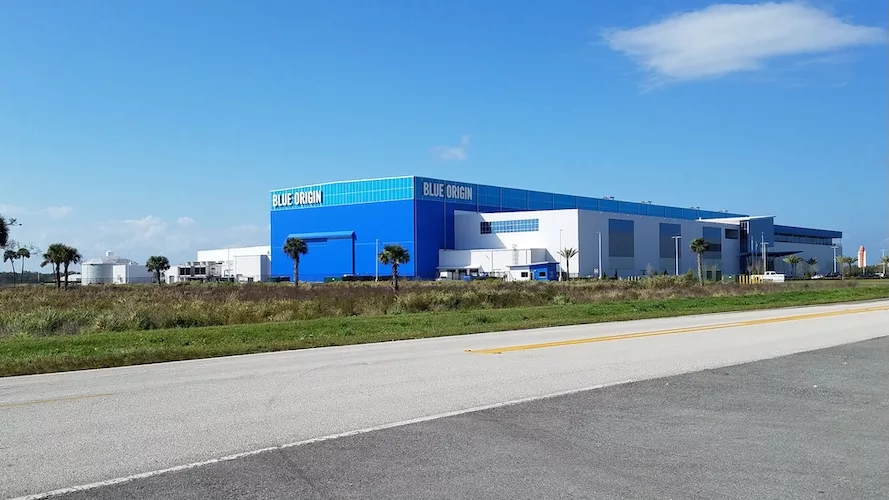
The Blue Origin headquarters in Cape Canaveral, Fla., serves as a central hub for the company’s Space Coast operations.
Aerospace company Blue Origin, founded by tech billionaire Jeff Bezos, is facing mounting scrutiny in Florida over wastewater tied to its Merritt Island manufacturing campus. A draft permit issued by the Florida Dept. of Environmental Protection (DEP) has triggered petitions, criticism from environmental groups and a unanimous vote by Brevard County commissioners to request a public hearing.
The DEP proposal would allow Blue Origin to discharge up to 0.49 million gallons per day of treated industrial wastewater into a 403,000‑sq‑ft stormwater pond that drains into the Indian River Lagoon. The proposed volume falls just below the threshold that would trigger stricter nutrient limits under state law—a point fueling opposition from advocates and local officials who warn that even treated effluent could worsen nutrient levels in a lagoon already struggling with seagrass loss, algal blooms and wildlife declines.
Although DEP is not required to hold a hearing, public pressure has intensified. A petition opposing the plan has gathered more than 10,000 signatures, and on Dec. 9 Brevard County commissioners voted unanimously to request a public hearing, citing widespread concern. Neither DEP nor the commissioners returned ENR's calls seeking comment.
Among those weighing in is the Marine Resources Council (MRC), a Palm Bay, Fla.-based nonprofit focused on protecting and restoring the Indian River Lagoon. In a Dec. 4 letter to DEP, MRC warned that the proposed discharge could add nearly 178 million gallons of freshwater annually to the northern lagoon, further lowering salinity and undermining seagrass and shellfish recovery.
The group emphasized the lagoon’s $28-billion annual economic value and noted that restoration costs already exceed $14 billion. MRC also raised concerns about cumulative impacts from spaceport growth, citing pollutants associated with launches—such as heavy metals and black carbon—and asked DEP to hold a public meeting to discuss monitoring requirements, treatment options and long-term wastewater management.
“This isn’t just one wastewater dump … we have multiple operations—SpaceX, NASA itself—all ramping up operations at the spaceport," said Laura Wilson, executive director of MRC, "That’s something we don’t feel is being addressed in any of these permit applications that come through.”
The Merritt Island proposal comes as DEP has already approved another Blue Origin wastewater permit at Cape Canaveral. The five‑year industrial wastewater permit for the company’s launch‑pad deluge system at Cape Canaveral Space Force Station, effective through Nov. 5, 2029, regulates the collection and management of water used during launches and static‑fire tests. Each event can use up to one million gallons, with most released as steam and the remainder routed to a retention pond authorized by the St. Johns River Water Management District.
Under the permit, Blue Origin must conduct quarterly sampling for pH, nutrients, metals, hydrocarbons and solids, with results submitted through discharge monitoring reports. Limits for nitrogen and phosphorus are set under the Banana River Basin Management Action Plan, and groundwater monitoring wells must confirm compliance under monthly, quarterly and annual schedules beginning Jan. 1.
As regulators weigh new industrial discharges upstream, projects and policy changes downstream highlight the scale of ongoing recovery work in the estuary. In July, the U.S. Environmental Protection Agency designated a 12‑mile stretch of the Indian River lagoon from Vero Beach to Fort Pierce—about 90 miles south of Cape Canaveral—as a no‑discharge zone for boats, banning even treated sewage, WFLX reported. And in Melbourne, about 30 miles south of Cape Canaveral, the $23.2‑million Crane Creek/M‑1 Canal Flow Restoration Project recently rerouted base flow back to the St. Johns River, reversing a century‑old diversion that had been sending nutrient‑rich stormwater east into the lagoon.