Infrastructure
Arkansas Advances $154M in Water and Wastewater Projects
Dozens of projects—from treatment plant expansions to meter upgrades—advance under state and federal financing programs
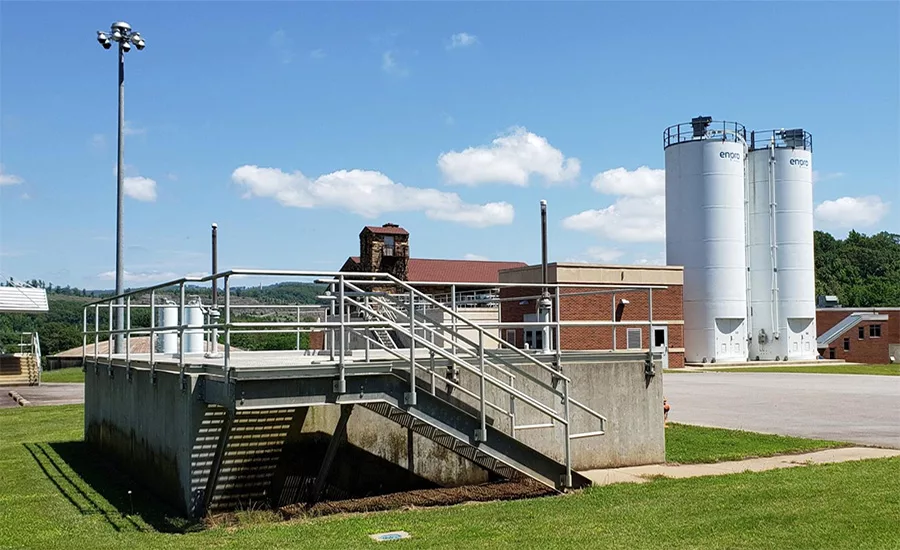
A municipal water treatment facility in Fort Smith, Ark. The state on Nov. 19 approved nearly $154 million for 59 water and wastewater projects, including treatment-plant expansions, distribution upgrades and rural-system improvements.
Arkansas officials on Nov. 19 approved nearly $154 million for 59 water and wastewater infrastructure projects statewide, advancing treatment-plant upgrades, distribution-system improvements, sewer rehabilitation, and regionalization efforts supported by federal and state programs.
According to the Arkansas Department of Agriculture’s Natural Resources Division, the package includes $81.38 million from the Clean Water State Revolving Fund, $54.63 million from the Drinking Water State Revolving Fund, $1.12 million through the Small, Underserved, and Disadvantaged Communities grant program, and $16.84 million from state water infrastructure funds.
Gov. Sarah Huckabee Sanders (R) said Arkansas communities “are expanding and demanding more from our infrastructure,” adding that her administration is committed to ensuring systems “can keep up with demand so every Arkansan has clean water to drink and wastewater systems that work.”
Growth Hubs and Rural Systems Share Funding
A significant portion of the projects is concentrated in northwest Arkansas, where Benton and Washington counties continue to experience rapid population growth.
Bentonville, Garfield, Gravette, Lincoln, and the Washington Water Authority each received financing for distribution improvements, treatment-facility upgrades, or septic-system remediation programs that together reach more than 94,000 customers.
RELATED
Federal Loan Programs Can’t Keep Pace with Growing Clean-Water Needs
Arkansas Secretary of Agriculture Wes Ward told the Arkansas Advocate that the investments will help communities “continue to grow and attract new economic opportunities,” particularly in regions where system demand is increasing.
Central Arkansas also saw significant allocations. Saline County received more than $11.5 million for wastewater treatment improvements and a wholesale water system expansion drawing from the Ouachita River, expected to bolster supply for nearly 100,000 customers.
In Pulaski County, Little Rock Water Reclamation Authority secured more than $4 million for a package of facility, pump-station, and conveyance upgrades.
Elsewhere in the state, several rural systems received financing for rehabilitation, filtration improvements, or meter modernization to address long-standing maintenance needs.
Major Projects Advance Across Arkansas
Clarksville in Johnson County received the state’s largest single financing package—more than $36.3 million—for improvements to its pollution-control facility serving 7,663 customers. Mayflower in Faulkner County secured $11.54 million for a regionalization project with Conway Corporation.
Bentonville received about $9.62 million for a supply-transmission loop to reinforce service in one of Arkansas’ fastest-growing population centers, and Mountain Pine in Garland County received $7.39 million for sewer-system rehabilitation.
Garfield’s $7.5-million award, delivered entirely as principal forgiveness, will support major water main improvements. Natural Resources Division Director Chris Colclasure said the latest round “will provide substantial benefits to the citizens served and strengthen the resilience of systems across the state.”
Smaller communities, including Bonanza, Dierks, Hickory Ridge, Ozan Creek, Tuckerman, and Warren, received disadvantaged-community grants for meter replacements, generator installations, filtration work, creek-crossing repairs, and regionalization.
Additional state loans support emergency wastewater-treatment repairs, septic-system remediation administration, and waterline extensions in Mansfield, Beebe, Norman, and several county-level utilities.
IIJA Funding Window Shapes Deployment
The funding arrives as Arkansas continues to draw on supplemental federal capitalization grants through the 2021 Infrastructure Investment and Jobs Act (IIJA), which provides expanded SRF funding through federal fiscal 2026. EPA guidance requires states to deliver at least 49% of each year’s allocation as principal forgiveness or grants, reflected in the unusually high number of subsidized awards in this cycle.
EPA implementation memoranda emphasize that IIJA funds must be committed within federal periods of performance and that supplemental appropriations taper after 2026 when the IIJA sunsets.
RELATED
Drinking Water Leaders Convene to Tackle Funding Challenges, Forever Chemicals
A Natural Resources Division spokesperson said the agency “continues to work closely with local systems to help them move projects from planning into construction as quickly as possible,” a priority as the IIJA window narrows.
The state has not yet released bid schedules for the new awards, though meter upgrades, smart-meter modernization, localized line replacements, and septic-system remediation typically move quickly to procurement. Larger treatment-plant expansions, filtration upgrades, and regionalization efforts generally require extended design and permitting.
EPA’s national needs assessments indicate Arkansas faces long-term water and wastewater capital requirements totaling billions of dollars.
Many systems receiving principal-forgiveness loans serve only a few hundred to a few thousand customers, and Colclasure said continued infrastructure investment “is essential for the well-being of Arkansans and the growth of our communities,” noting that several projects funded in the November round “have waited years to advance.”

Bryan Gottlieb is the online editor at Engineering News-Record (ENR).
Gottlieb is a five-time Society of Professional Journalists Excellence in Journalism award winner with more than a decade of experience covering business, construction and community issues, including finance, law and real estate. He has reported for Adweek and the San Diego Daily Transcript and led a community newsroom in Santa Monica, Calif. He served as editor-in-chief of the Detroit Metro Times and as managing editor at Roofing Contractor, where he helped shape national industry coverage. At Engineering News-Record, Gottlieb covers breaking news, large-scale infrastructure and megaprojects, regulatory developments and business trends across the U.S. and global construction sectors.
email: gottliebb@enr.com | office: (248) 786-1591