2025 Southwest Best Projects
Best Project, Water/Environment: Inner Basin Waterline Restoration
Inner Basin Waterline Restoration
Ariz.
BEST PROJECT
Submitted by Hunter Contracting Co.
Owner City of Flagstaff
Lead Design Firm Jacobs
General Contractor Hunter Contracting Co.
Civil Engineer Ardurra
Geotechnical Services Speedie & Associates
Surveying Arizona Surveying
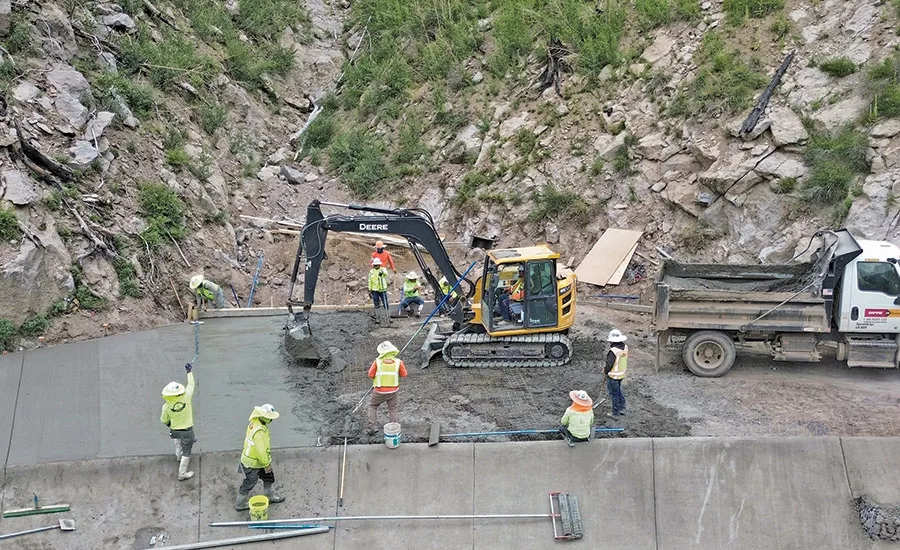
The one-two punch of a major wildfire coupled with debris from subsequent flash floods compromised sections of the 129-year-old pipeline that supplies 20% of Flagstaff’s summer potable water. Complicated by the site’s remote, high-elevation location, the emergency repair and stabilization effort required creative solutions.
High-risk areas were prioritized using peak flow calculations, allowing work to begin on the most vulnerable sites while designs for the next phases were finalized. Crews worked in tight sequence; structured wall installation was immediately followed by concrete pours, keeping momentum steady and transitions seamless.
The remote, wildfire-scarred landscape presented additional complexity. Due to restricted access and tight workspaces, the team used mid-size excavators and 5-cu-yd dump trucks instead of traditional cement mixers. These vehicles proved more nimble in navigating the narrow mountain roads and confined staging areas.
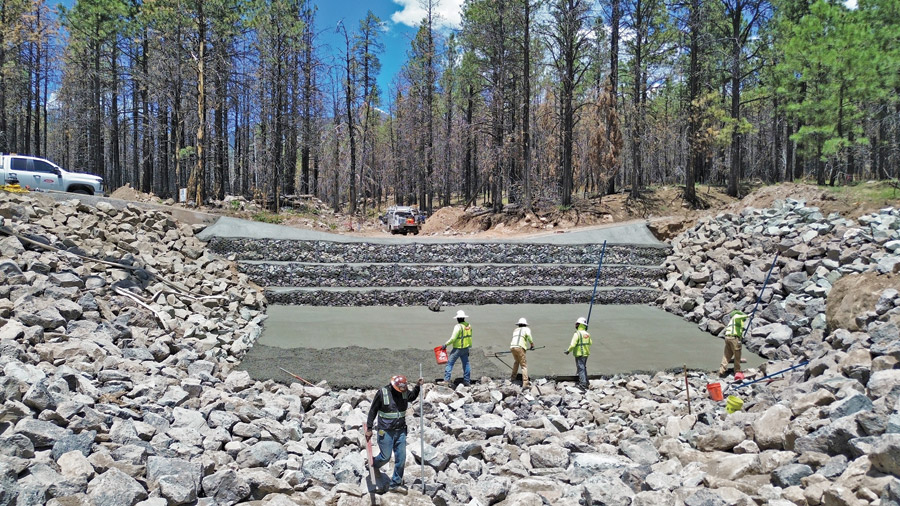
Photo courtesy Hunter Contracting Co.
Some of the highest locations required materials to be transferred three to four times between various sizes and types of equipment. To reduce costly and time-consuming equipment transport, the team employed strategic scheduling to keep machinery on the mountain as long as possible.
Temporary access roads were sometimes created to reach the damaged waterline, adding days for both setup and restoration. Weather also posed a constant threat to progress from one season to the next, and crews had to contend with fire danger, monsoon-driven floods and snow and ice. Wildlife encounters were another concern. Crews never worked alone, and all food and trash were removed daily to reduce animal attraction. Bear, bobcat, deer and elk were common sightings, and work crews adjusted accordingly.
Over two years, the team repaired and stabilized more than 40 sites across a 13-mile stretch, utilizing nearly 2,300 cu yd of concrete, more than 5,900 linear ft of gabion baskets and custom slope stabilization systems.
Gabion walls were customized into stair-step configurations to resemble natural waterfalls and minimize the volume of imported rock, while earth-toned finishes and local materials blend with the landscape.
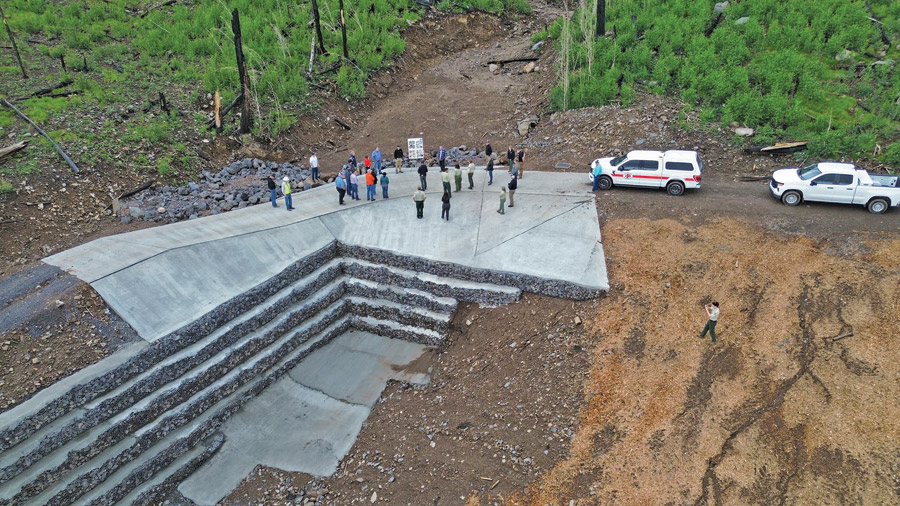
Photo courtesy Hunter Contracting Co.
Water access posed a significant challenge in the remote forest environment. To avoid disrupting municipal operations, the team sourced water directly from the existing waterline in a controlled manner that maintained uninterrupted service to Flagstaff’s treatment plants.
Community engagement and cultural respect were central to the project. Archaeologists mapped historically sensitive areas, and construction crews protected those areas by carefully filling roads and adjusting alignments.
Public outreach kept residents informed and up-to-date on progress. During the project, team members even made time to volunteer with the U.S. Forest Service and local groups to help realign the Oldham Trail.
Along with restoring the waterline, the project also protected an adjacent gas transmission line and improved the safety of nearby hiking trails. Trail systems and access roads were reopened as soon as possible, and construction crews were able to maintain recreational access for hikers, bikers and equestrians during construction.