2025 Texas & Southeast Best Projects
Project of the Year Finalist & Best Highway/Bridge: Hurricane Ian Sanibel Access Project
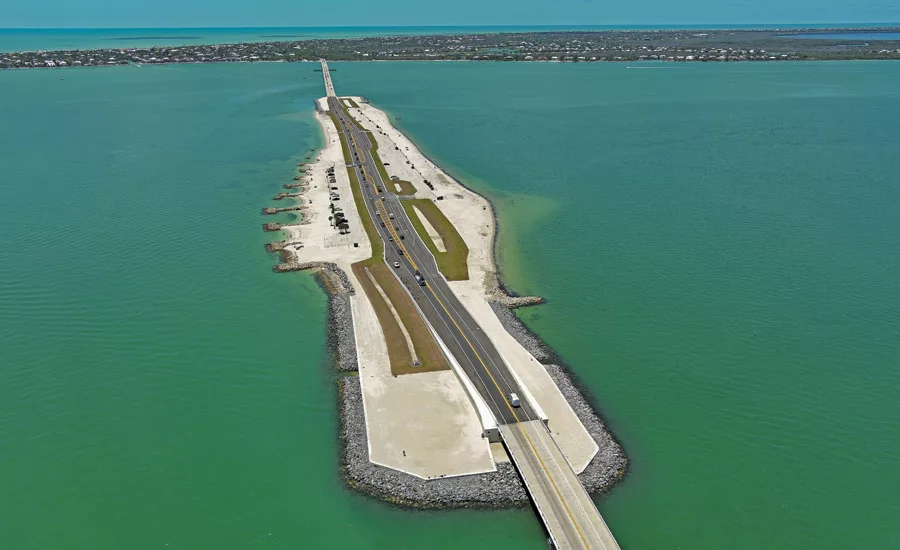
Hurricane Ian Sanibel Access Project
Fla.
PROJECT OF THE YEAR FINALIST and BEST PROJECT
Submitted by Superior-de Moya Joint Venture
Owner Florida Dept. of Transportation
Lead Design Firm/Civil Engineer Kisinger Campo & Association
General Contractor Superior-de Moya
Structural Engineer H&H (Hardesty & Hanover)
In September 2022, Hurricane Ian severed the only access to Sanibel and Captiva islands, stranding more than 6,400 residents and paralyzing emergency response efforts. Within a week, the project team had established a crucial convoy crossing that allowed emergency utility teams to restore power and communications.
A temporary causeway quickly followed, setting the stage for an eventual 30-month effort to rebuild and improve the permanent infrastructure amid conditions that included strong tidal currents and rapidly changing weather conditions.
With hotels and other long-term accommodations in short supply after the hurricane, the team located specialized mobile housing firms capable of rapidly deploying complete living facilities for workers, including bunkhouses, restrooms and comprehensive food service operations on site. This housing solution assured continuous workforce availability while controlling worker logistics costs.
Material suppliers worked 24/7 to provide essential construction materials, often operating in darkness or using temporary lighting and backup power systems until full power was restored. With communications infrastructure still crippled, satellite communication systems provided a link with the team’s home offices, ensuring continued cost oversight and project management. The project incorporated innovative sheet pile wall systems, armor stone, asphalt pavement and comprehensive scour prevention with gabion marine mattress technology.
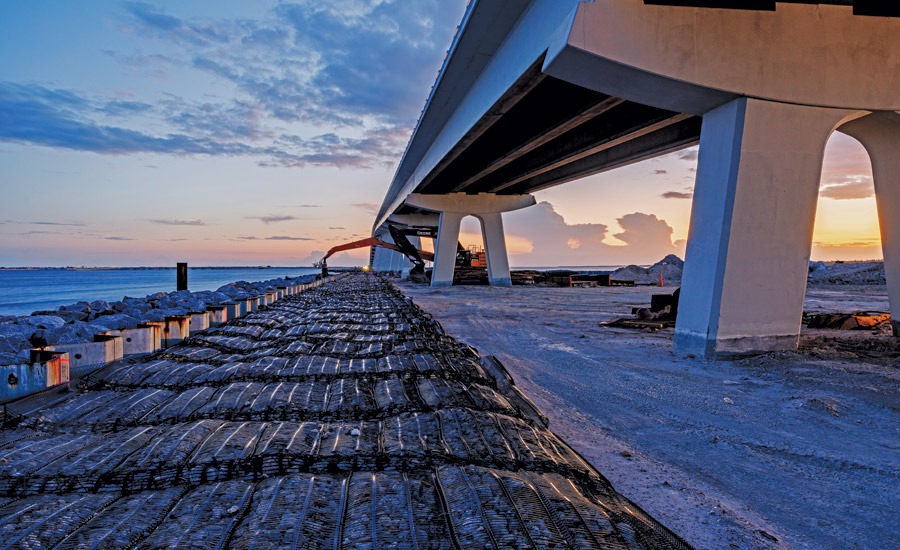
Photo courtesy Superior Construction
To enhance the structure’s resilience against future storms, contractors raised the roadway by 2 ft, and seawalls were elevated from 5 to 8 ft. In all, approximately 128,000 tons of armor stone—sized much larger than typical riprap—was strategically placed along all new steel seawalls to provide additional protection against future hurricanes.
The project’s environmental restoration elements included creating a mitigation area that will allow for future seagrass growth, replenishing habitat that washed away during Hurricane Ian.
The Sanibel Causeway reconstruction presented unique safety challenges inherent to post-hurricane infrastructure recovery and marine construction. Working in a disaster zone on ground with limited stability posed continuous hazards. The team addressed this by implementing specialized daily inspections for ground stability, particularly after rainfall. Following Hurricane Debby in 2024, when water-saturated soil nearly caused equipment rollover, the team established mandatory ground pressure testing before deploying any heavy equipment.
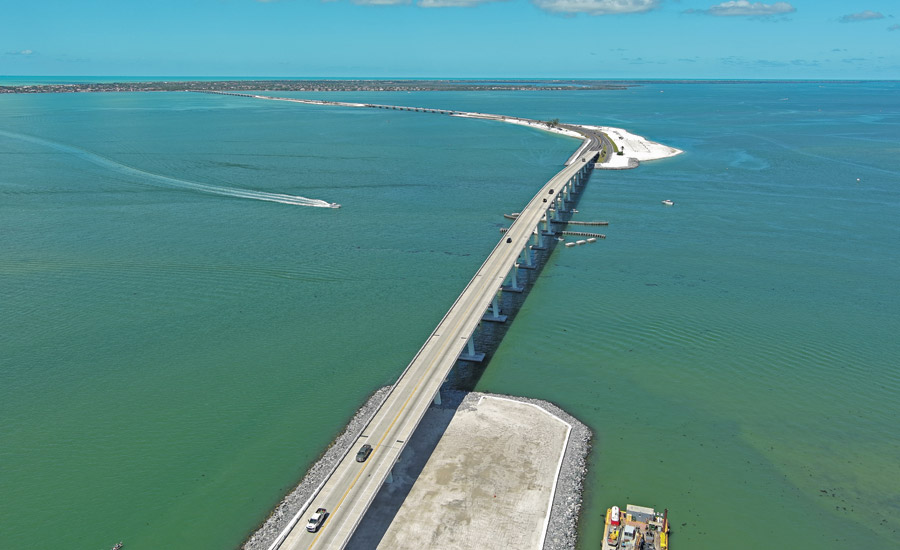
Photo courtesy Superior Construction
Marine operations faced additional risks, including strong tidal currents and rapidly changing weather conditions. Following an incident in which a barge broke loose during a sudden squall, the team implemented a severe weather monitoring protocol. Designated safety officers monitored conditions hourly during marine operations, with mandatory evacuation triggers set 45 minutes before predicted severe weather.
Completed two years ahead of schedule at a cost of $328 million, the rebuilt infrastructure underwent real-world testing during the 2024 hurricane season, successfully withstanding hurricanes Debby, Helene and Milton without disrupting access to the islands.