2025 Texas & Southeast Best Projects
Best Renovation/Restoration: Make Ready Market & Idle Beer Hall
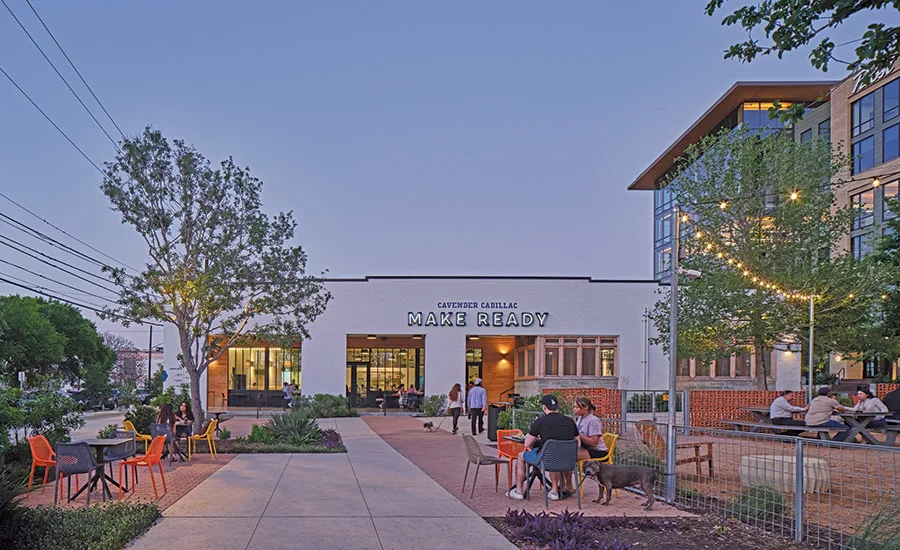
Make Ready Market & Idle Beer Hall
San Antonio
BEST PROJECT
Submitted by Byrne Construction Services
Owner CBMB MAKE-READY LLC
Lead Design Firm Studio8 Architects
General Contractor Byrne Construction Services
A space where Cavender Cadillac cars were once prepped for showroom delivery now hums with the sounds and smells of seven food vendors. Its counterpart, the former Clark Building, has been reborn as Idle Beer Hall, a 10-barrel craft brewery framed by original load-bearing masonry and hand-restored timber trusses. Together, the buildings form a campus around a shared courtyard. In addition, a walk-up café was assembled using a prefabricated wall system.
New roof trusses mirror the original geometry, while clerestory walls were rebuilt brick-by-brick to match 100-year-old patterns.
A mix of structural failure, preservation needs and complex site logistics came together in this project. The most pressing concern was the condition of the existing foundations. As crews uncovered misaligned footings and signs of settlement, it became clear that traditional repair methods would not be feasible. Some footings would have required excavation as deep as 8 ft beneath an already compromised structure. The contractor proposed using helical piles, eliminating the need for deep, adjacent excavations and providing superior load-bearing performance.
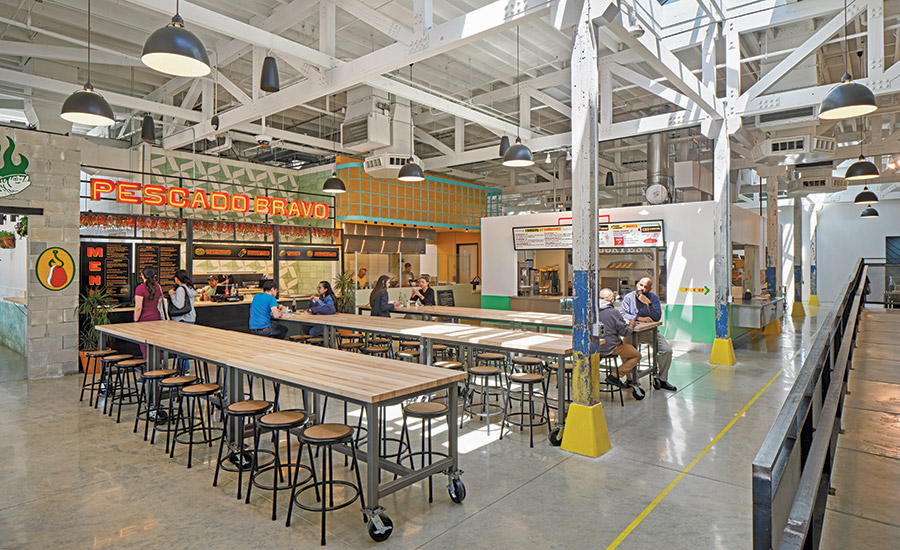
Photo courtesy Andrea Calo
Meanwhile, the team was managing precise field measurements for every structural component due to inconsistencies in the original masonry and framing. Structural shoring was deployed early and remained in place for months as crews removed and replaced timber trusses, coordinated vendor MEP locations and reconstructed walls. Custom bracing adapted a tilt-wall system to stabilize deteriorating masonry from the outside in.
The aging structure meant workers were operating under compromised rooflines and near deteriorated masonry, even before the project entered full demolition. Daily safety briefings were reinforced by structural shoring systems that were treated as active fall protection zones. Early orientations emphasized the unusual conditions, from historic walls with no lateral reinforcement to floor transitions mid-demolition and overhead hazards from existing trusses. Fall arrest systems were used liberally and access to certain zones was strictly limited.