California City Scoop: Construction Starts in San Francisco
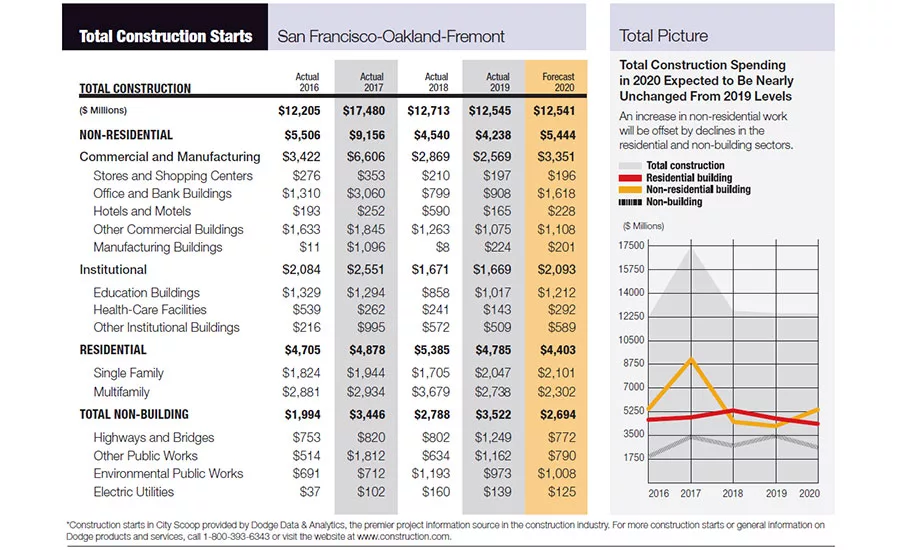
Total construction spending in 2020 expected to be nearly unchanged from 2019 levels
An increase in non-residential work will be offset by declines in the residential and non-building sectors.
City Grill
 John Marx
Co-Founding Design Principal, Chief Artistic Officer
Form4 Architecture
Over the past decade, along with changing the city’s culture and commercial scene and dramatically increasing workspace and housing demand, Silicon Valley’s expansion into San Francisco has brought more international capital and raised expectations for architecture quality. “International investment presents an opportunity to reverse a cultural trend best identified by this 40-year-old question: ‘Why does San Francisco seem to routinely get B-level architecture from A-list architects?’” asks Marx, who says it’s not for lack of local talent but from a dearth of cultural interest. “When capital changes its value equations, there should be a direct effect on architectural design and culture.”
Marx says he expects San Francisco’s vibrancy to express itself through a more humane approach to design and better architecture. He points to the firm’s Innovation Curve at Stanford Research Park in Palo Alto as a model that resonates with and includes the community. The 276,000-sq-ft, LEED Platinum campus features an exterior ribbon-shading element that curves to metaphorically follow R&D timelines.