Sidebar
By Bryan Gottlieb
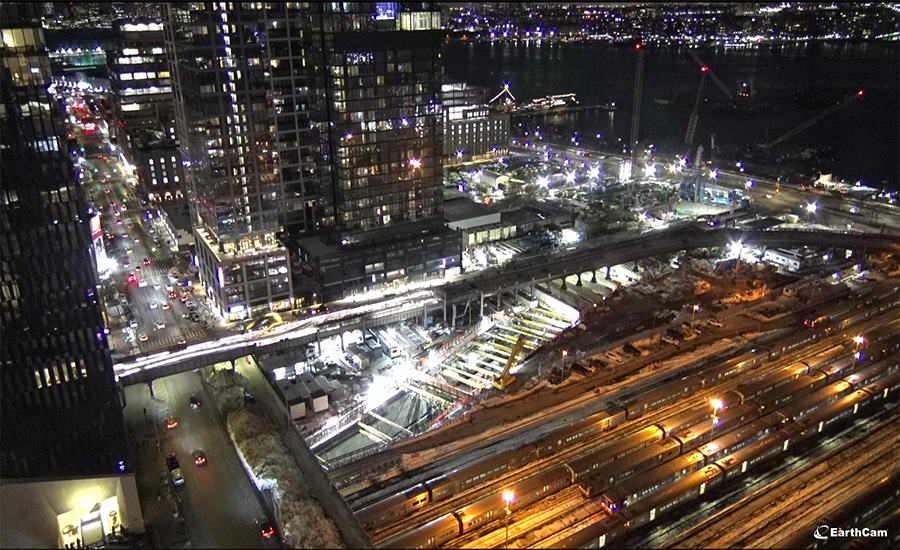
Construction activity at the Hudson Tunnel Project has continued on select early packages as federal courts consider parallel lawsuits challenging the U.S. Dept. of Transportation’s funding freeze.
Photo courtesy of the Gateway Development Commission
February 6, 2026
Two federal lawsuits are shaping the legal framework around the Hudson Tunnel Project, each addressing a different construction risk created by the Trump administration’s decision to suspend federal funding for the $16-billion rail megaproject. One case centers on whether federal agencies can halt disbursements to an active project; the other focuses on what financial remedies are available if that action forces work to slow or stop. For contractors and project partners, the distinction has direct implications for cash flow, sequencing and cost recovery.
New York and New Jersey filed suit in the U.S. District Court for the Southern District of New York seeking declaratory and injunctive relief to block the U.S. Dept. of Transportation from continuing its funding suspension. The states argue that USDOT and its modal agencies exceeded their authority by withholding payments that had already been obligated under executed grant and loan agreements while construction remains underway.
From a construction perspective, the case is aimed at preventing prospective harm. The states contend that continued suspension of disbursements would force work stoppages, trigger layoffs, require site stabilization and security measures, and drive cost escalation tied to demobilization and resequencing of complex underground work.
USDOT has said the suspension is tied to a compliance review of contracting practices under a new federal rule governing disadvantaged business enterprise programs. Project sponsors dispute that rationale, arguing that the funding agreements do not permit unilateral suspension absent a documented contractual breach. The case is being heard by Judge Jeannette A. Vargas.
In a separate action, the Gateway Development Commission filed a breach-of-contract lawsuit in the U.S. Court of Federal Claims, which handles monetary disputes against the federal government. Unlike the SDNY case, this action is retrospective and contractual, focusing on whether the federal government failed to make required payments under existing grant and loan agreements.
The commission is seeking about $205 million in disbursements and damages associated with costs incurred as funding was withheld and construction activity was curtailed. Its filing emphasizes that a forced pause on an active tunneling project would generate substantial additional costs tied to demobilization, remobilization, idle equipment, disrupted tunnel-boring sequences and extended overhead. For contractors, the case speaks directly to how pause-related costs, suspension claims and change orders may ultimately be allocated if the funding freeze is deemed unlawful.
Taken together, the lawsuits reflect a bifurcated strategy. The SDNY case is designed to keep work moving by stopping or limiting federal action that interrupts cash flow. The Court of Federal Claims case preserves a pathway for recovering costs if work is disrupted. For a megaproject already deep into early civil construction, those parallel tracks shape near-term planning decisions and long-term claims exposure as the legal process unfolds.