After months of struggle to restore power in Puerto Rico, the territory’s Gov. Ricardo Rosselló on Jan. 22 announced that the state-owned Puerto Rico Electric Power Authority will be privatized.
A newly released draft federal National Mitigation Investment Strategy stresses the nation must become more resilient through better agency coordination, stricter building codes and development of more natural features such as wetlands.
As private and public agencies
continue to restore power to the 70% of Puerto Rico that is still without electricity, the island’s government announced it will cancel a $300-million grid-reconstruction contract with Whitefish Energy.
Puerto Rico’s damaged infrastructure has caught the attention of Google, Tesla and other firms that are pitching ideas such as cellular-signal-relaying balloons and off-grid power distribution.
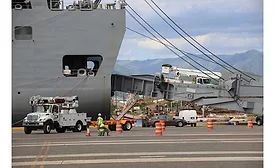
Many Puerto Ricans are living without reliable power, water and cellular coverage as the U.S. Army Corps of Engineers implements a temporary relief system for critical infrastructure and works to stabilize the spillway of a hurricane-damaged dam.
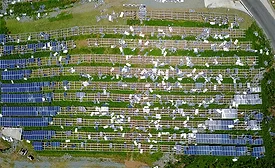
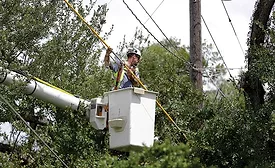
Power has been restored to about 5% of customers in Puerto Rico after nearly all of the island’s 1.57 million customers were left in the dark on Sept. 20, when Hurricane Maria left the power grid in shambles.
An initial reconnaissance of the damage from the Sept. 19 Puebla-Morelos earthquake that killed over 300 people and toppled over 40 buildings in Mexico City found that seismic building codes—put in place after a 1985 deadly quake—were effective, according to a Stanford University professor.